
Greg Abel Spent $9.6 Billion Buying Berkshire Hathaway While Its Insurance Profits Sank
In the third quarter of his first year as chief executive, repurchases more than doubled and underwriting profit fell 43%, an early look at how Warren Buffett’s successor intends to use one of the largest cash piles in business.
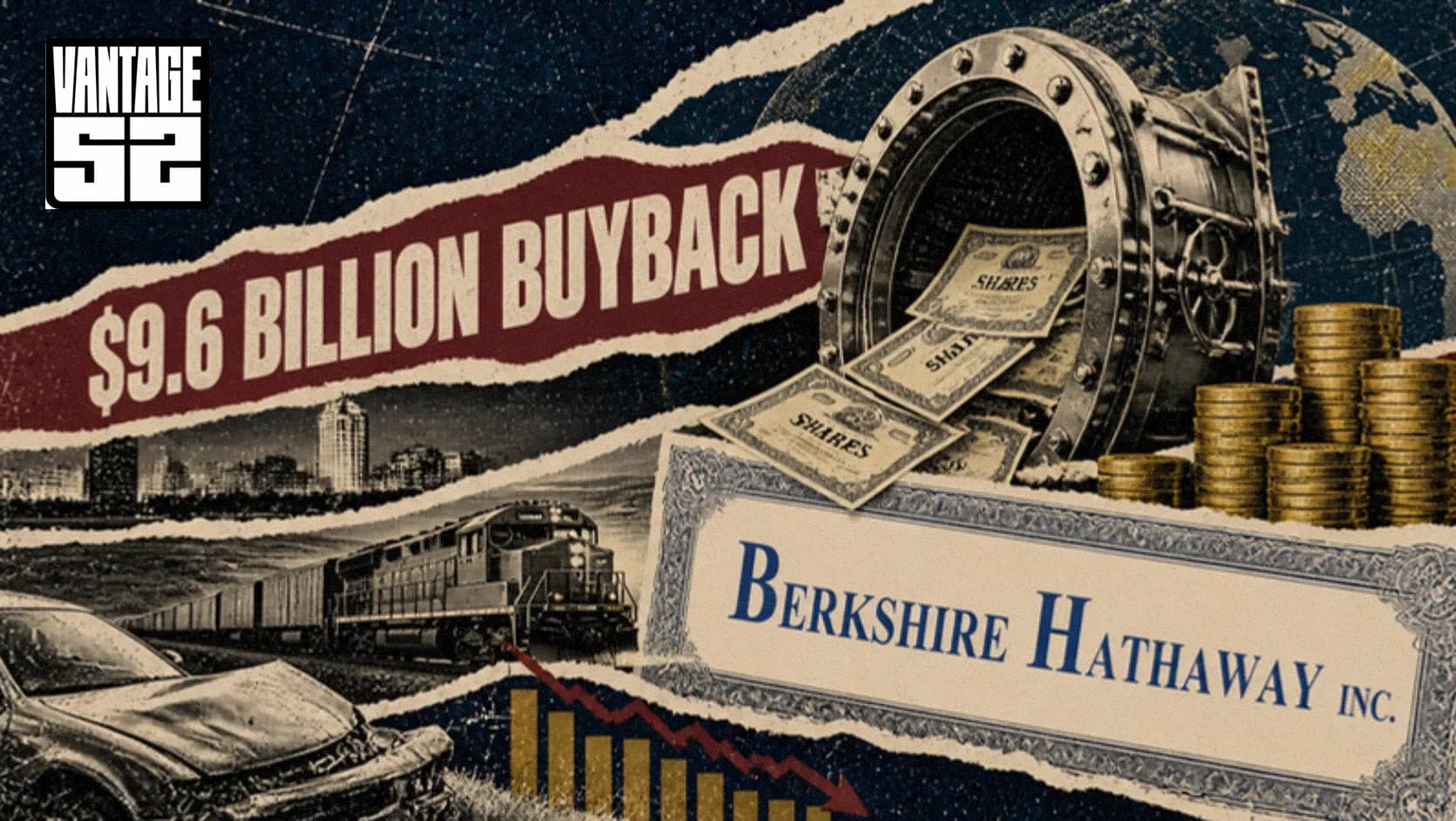
Berkshire Hathaway bought back about $9.6 billion of its own shares in the third quarter, according to results published on 7 November, more than double the $4.5 billion it spent in the second quarter. Repurchases for the first nine months of the year now stand at about $14.4 billion.
It is the clearest signal so far of how Greg Abel, who succeeded Warren Buffett as chief executive on 1 January, sees the company he now runs. Under Berkshire’s rules, shares are repurchased only when the chief executive, after consulting the chairman, believes the price is below intrinsic value, conservatively determined. Berkshire will not buy if doing so would take its cash and Treasury bills below $30 billion.
The pace picked up as the quarter went on. The company’s quarterly filing shows it bought about 3.1 million Class B shares in July at an average of $496.24, and about 7.7 million in September at an average of $506.64. Berkshire was paying more and buying more at the same time.
Insurance Is Where It Hurts
The buyback landed in a weaker quarter. Operating earnings fell 5.8% to $12.705 billion from $13.485 billion a year earlier. Net earnings dropped 28% to $22.112 billion, although Berkshire itself says the amount of investment gains in any given quarter is “usually meaningless.”
Insurance did most of the damage. After-tax underwriting earnings fell 43% to $1.352 billion from $2.369 billion, and investment income from the insurance business fell 14% to $2.734 billion.
Geico is at the centre of it. The car insurer’s pre-tax underwriting earnings fell to $982 million from $1.773 billion. Its loss ratio rose 5.1 percentage points to 76.6%, reflecting more frequent and more costly claims and lower average premiums per policy. Underwriting expenses rose 17% and premiums written slipped 0.3%. Over the first nine months, Berkshire attributes the higher expense ratio mainly to commissions and advertising.
The Rest of the Empire
Elsewhere the picture was better. After-tax earnings at BNSF, the railroad, rose 19.3% to $1.729 billion. Berkshire Hathaway Energy earned $1.612 billion, up from $1.489 billion, and manufacturing, service and retailing brought in $4.042 billion, up from $3.616 billion.
Abel has also been buying whole companies. Berkshire paid about $6.8 billion in cash for homebuilder Taylor Morrison, completing the deal on 24 July, and closed the $9.4 billion purchase of OxyChem on 2 January, a transaction agreed before he took over. In the stock market, by contrast, activity was quiet. StockTitan calculated from the filings that Berkshire was a small net seller of about $0.4 billion in the quarter, and CNBC reported no change among its largest holdings, Alphabet, American Express, Apple, Bank of America and Coca-Cola.
A Very Large Pile of Cash
Even after all of that, Berkshire is far from short of money. CNBC reported cash and Treasury bills of $377.4 billion at the end of September. Berkshire’s own measure, which excludes the railroad and utility businesses and nets off Treasury bills bought but not yet paid for, was $352.3 billion. The third-quarter buyback equalled less than 3% of that figure.
Investors seem to approve. CNBC reported that Berkshire’s Class A shares had risen more than 12% over the past month, while the S&P 500 fell 5.5%. The shares are up 13% this year against 7.8% for the broad market.
What to Watch Next
With the shares higher, the next filing will show whether Abel still considers them cheap. Buybacks slow when the price stops looking like a bargain, so the size of the fourth-quarter figure will say a good deal about his view of value.
Geico matters just as much. The insurer is accepting lower premiums per policy while claims rise, a trade that can only run for so long. Berkshire’s next report of its stock holdings, due in mid-November, and its annual report early next year will give shareholders a fuller picture of the first year after Buffett.
Tags
Sources
Where the reporting above comes from. Follow these to check the figures and statements for yourself.
- Berkshire Hathaway, Third quarter 2026 earnings release Net and operating earnings by segment, share repurchases and insurance float.
- Berkshire Hathaway, Form 10-Q for the quarter ended 30 September 2026 Geico’s underwriting results, monthly repurchases and prices, the buyback rules, cash and the Taylor Morrison and OxyChem acquisitions.
- CNBC, Berkshire Hathaway more than doubles buybacks in third quarter as earnings decline Second-quarter buybacks, the cash figures, share price performance and the largest equity holdings.
- Bloomberg, Berkshire Hathaway’s Operating Earnings Fall, Buybacks Rise Bloomberg’s report on the quarter, republished by Yahoo Finance.
- StockTitan, Berkshire Hathaway earnings show cash falling after the Taylor Morrison deal Calculations from the filings of equity purchases and sales by quarter.
- Berkshire Hathaway, Completion of the Taylor Morrison acquisition The company’s announcement that the purchase had been completed.