

Waymo Pauses Freeway Rides in All Five Markets After California DMV Ban
California’s motor vehicles department barred Waymo’s driverless cars from state freeways on 11 November, citing an “imminent hazard”. It is the company’s second freeway pause this year, and no restart date has been set.
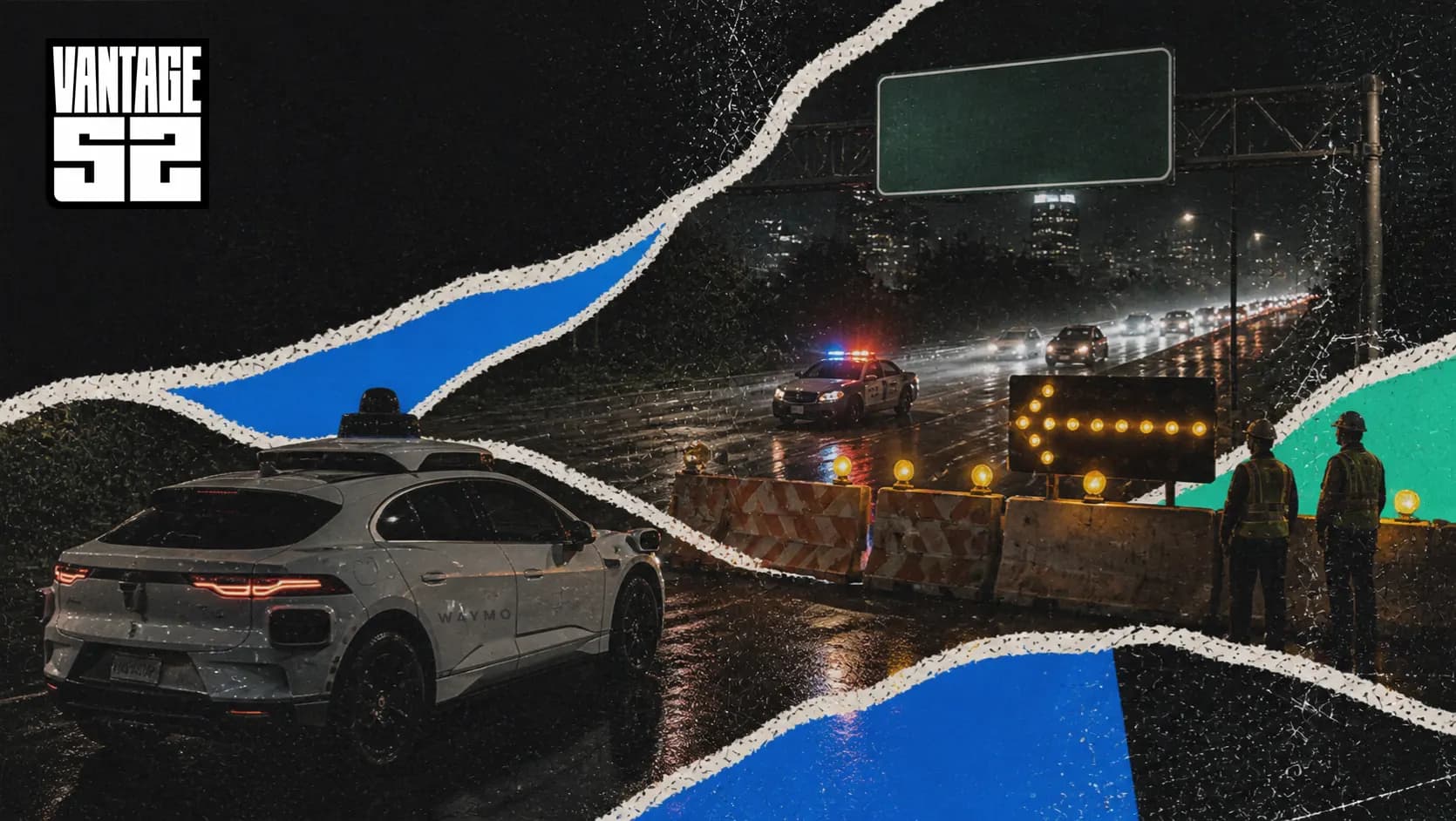
California’s Department of Motor Vehicles has barred Waymo’s driverless cars from the state’s freeways, finding that they “pose an imminent hazard to public safety due to recurring incursions by its vehicles into active construction zones”. The restriction took effect on Wednesday 11 November and became public on Tuesday 17 November.
Waymo, Alphabet’s robotaxi company, responded by stopping paid freeway trips everywhere it offered them, in the San Francisco Bay Area, Los Angeles, Phoenix, Miami and Austin. Its cars keep driving on ordinary streets, where Waymo says it serves more than half a million trips a week. Neither the company nor the regulator has given a date for freeway service to resume.
The order now reaches well beyond California because Waymo chose to apply it nationally. A single state’s safety finding has removed a product feature in three other states, six months after a similar halt, while Waymo expands on the $16 billion it raised in February at a $126 billion valuation.
What the DMV Said, and Who Reported It
The DMV has not posted the order on its website. Its wording is known from statements by its spokesperson, Jonathan Groveman, to reporters. KQED and the Associated Press, in a report carried by KPBS, quoted his finding of an imminent hazard. The AP also quoted the condition for lifting the restriction, which stays until Waymo “demonstrates to the Department that it has taken effective corrective actions”.
The order covers more than rides. KQED, the San Francisco Standard and Fortune reported that it also stops Waymo from testing driverless cars on California freeways. Waymo may still drive them there with a trained specialist behind the wheel.
Two Bay Area incidents preceded it, according to the DMV’s account as reported by TechCrunch and the AP. On 5 November three Waymo vehicles drove into an active construction closure on US 101 near Burlingame. In a second incident, on Interstate 280 in San Francisco, a Waymo tried to get past California Highway Patrol cars running a traffic break, the manoeuvre in which patrol cars swerve across lanes to slow the traffic behind them.
The department described the incursions as recurring. It pointed to similar incidents on 18 May, after which Waymo had already been placed under restrictions and had taken corrective action, KQED and the San Francisco Standard reported.
Five Markets Lose Their Longest Routes
Waymo’s response gave up the freeway product for now but not its safety case. “Safety is at the foundation of everything we do”, said Dana Gallagher, a Waymo spokesperson, adding that the company had “temporarily restricted freeway operations across our other operating markets to evaluate our performance”. Waymo said the US 101 encounters involved no injuries or collisions.
Waymo began fully driverless freeway trips in the Bay Area, Phoenix and Los Angeles in November 2025, KQED reported, and later added Miami and Austin. Freeways shortened trips between San Francisco and Silicon Valley, TechCrunch noted, and the Bay Area service area runs from San Francisco to San José.
Riders already see the change. The Waymo app now warns passengers heading to San Francisco International Airport that their trips will take longer because routes avoid freeways, the San Francisco Standard reported.
Ordinary streets carry most of the business. The half a million weekly trips Waymo now cites compare with 400,000 a week when it announced its funding round in February. Street service continues across the 15 US cities where TechCrunch counts commercial operations, including Las Vegas, Dallas and Denver, where Waymo offers only city-street rides.
A Second Halt in Six Months
This is not the first time freeway rides have stopped. In May Waymo halted them abruptly without giving a specific reason, after social media posts showed its cars driving through traffic cones and struggling in construction zones, TechCrunch reported. It restored them from July after a software update meant to improve how its cars handle construction zones.
The DMV’s new finding says that fix did not hold on the point the regulator cares about most. A second restriction on the same ground within six months raises the bar for the next restart. According to Fortune, Waymo will have to show the department that its vehicles can reliably detect and respond to construction zones, emergency vehicles and other roadway hazards.
Waymo points to its overall record. It says that across more than 270 million fully autonomous miles through June, its cars were involved in 82% fewer injury-causing crashes than comparable human drivers, Fortune reported. Bryan Reimer of the MIT AgeLab told Fortune that robotaxis need to be “magnitudes safer” than human drivers to keep expanding. The DMV’s order turns on a narrower question, whether the cars respect a work zone, and that is the test Waymo now has to pass.
What Freeways Are Worth to a $126 Billion Business
Waymo does not publish its revenue, and Alphabet does not report it separately. Waymo sits in Alphabet’s Other Bets segment, which had revenue of $372 million in the third quarter, up from $344 million a year earlier, according to Alphabet’s quarterly filing. The segment’s operating loss widened to $2.05 billion from $1.43 billion, Fortune reported from Alphabet’s results.
Investors have nonetheless priced Waymo as a large business. The February round valued it at $126 billion, and that price rests on far more riders in far more cities. Longer trips are part of that case. Airport runs and journeys across a metropolitan area are the trips that use freeways, and they are where a robotaxi competes most directly with a private car.
Waymo has not disclosed what share of its trips or fares freeway routes account for, so the revenue cost of the pause cannot be measured from outside. What can be measured is the time it lasts. Fortune reported that Waymo plans to add more than 20 cities in 2026, including London and Tokyo, and a robotaxi service confined to surface streets is a smaller offer in sprawling regions such as Los Angeles and Phoenix.
One State Regulator, a National Product Decision
California gave itself more power over robotaxis this year. Rules the DMV adopted on 28 April allow it to impose targeted limits on an operator’s fleet size, location, speed and operating weather when public safety requires. They also let police issue a notice of noncompliance to the manufacturer when a driverless car breaks a traffic law. None of the published reports says which provision the freeway order relies on.
The order applies only in California. Waymo extended the pause to Phoenix, Miami and Austin itself, describing it as a step to evaluate performance. That choice is defensible on safety grounds, since keeping a feature running in Arizona that California has called a hazard would invite questions about the same software. Its effect is that one state regulator has, in practice, set product policy for Alphabet’s robotaxi business across the country.
It is a concrete case of the question VANTAGE52 examined in who will regulate AI, as states write their own rules while Washington has no single framework. Other autonomy businesses carry the same exposure. Zipline’s drone delivery expansion with Walmart also depends on a regulator, a federal aviation rule that was still pending in November.
The Evidence Waymo Has to Produce
The restriction has no end date. It lifts when Waymo satisfies the DMV that its corrective actions work, and Waymo says it is working with the department and state officials to restore freeway service. That decision is the next verifiable event, and the DMV has not said how it will judge the evidence or how long it will take.
Until it comes, every Waymo market that had freeway rides is back on surface streets, and the robotaxi trip to San Francisco’s airport takes longer than it did before 11 November.
Tags
Key Concepts
Sources
Where the reporting above comes from. Follow these to check the figures and statements for yourself.
- California DMV, New autonomous vehicle regulations strengthen oversight and enforcement and authorise trucks and transit The April 2026 rules that let the DMV impose targeted limits on fleet size, location, speed and weather, and let police issue noncompliance notices to manufacturers.
- Alphabet, Form 10-Q for the quarter ended 30 September 2026 Other Bets revenue of $372 million in the third quarter against $344 million a year earlier.
- KQED, California DMV restricts Waymo freeway operations as a hazard to public safety The DMV spokesperson’s statement, the 11 November effective date, the inclusion of testing, the 18 May incidents and the November 2025 freeway launch.
- Associated Press via KPBS, California bans Waymo autonomous vehicles from state freeways The DMV’s finding and the condition for lifting it, Waymo’s statement, and the markets where freeway rides were offered.
- TechCrunch, Waymo suspends freeway rides nationwide after California DMV order The order date and publication date, the US 101 and Interstate 280 incidents, the May pause and July restart, and Waymo’s weekly trips.
- LAist, DMV suspends Waymos from California freeways citing imminent public safety hazards The traffic break incident, the 11 November effective date and Waymo’s statement that it is working with state officials.
- The San Francisco Standard, California DMV bans Waymo from freeways The ban on driverless freeway testing, the airport trip warning in the Waymo app and the conditions for resuming.
- Fortune, Waymo suspends driverless freeway rides nationwide after California ban What Waymo must show the DMV, its safety statistics and comments from Bryan Reimer of the MIT AgeLab.
- Fortune, Waymo’s $126 billion valuation and Alphabet’s Other Bets results The $16 billion round at $126 billion, the Other Bets operating loss, weekly rides in February and 2026 expansion plans.