

Fed Faces a New Test as Inflation Revives Rate-Hike Expectations
U.S. inflation remains above the Federal Reserve’s target as energy prices rise and the labor market shows resilience, forcing investors to reconsider the path of interest rates and the cost of capital across global markets.
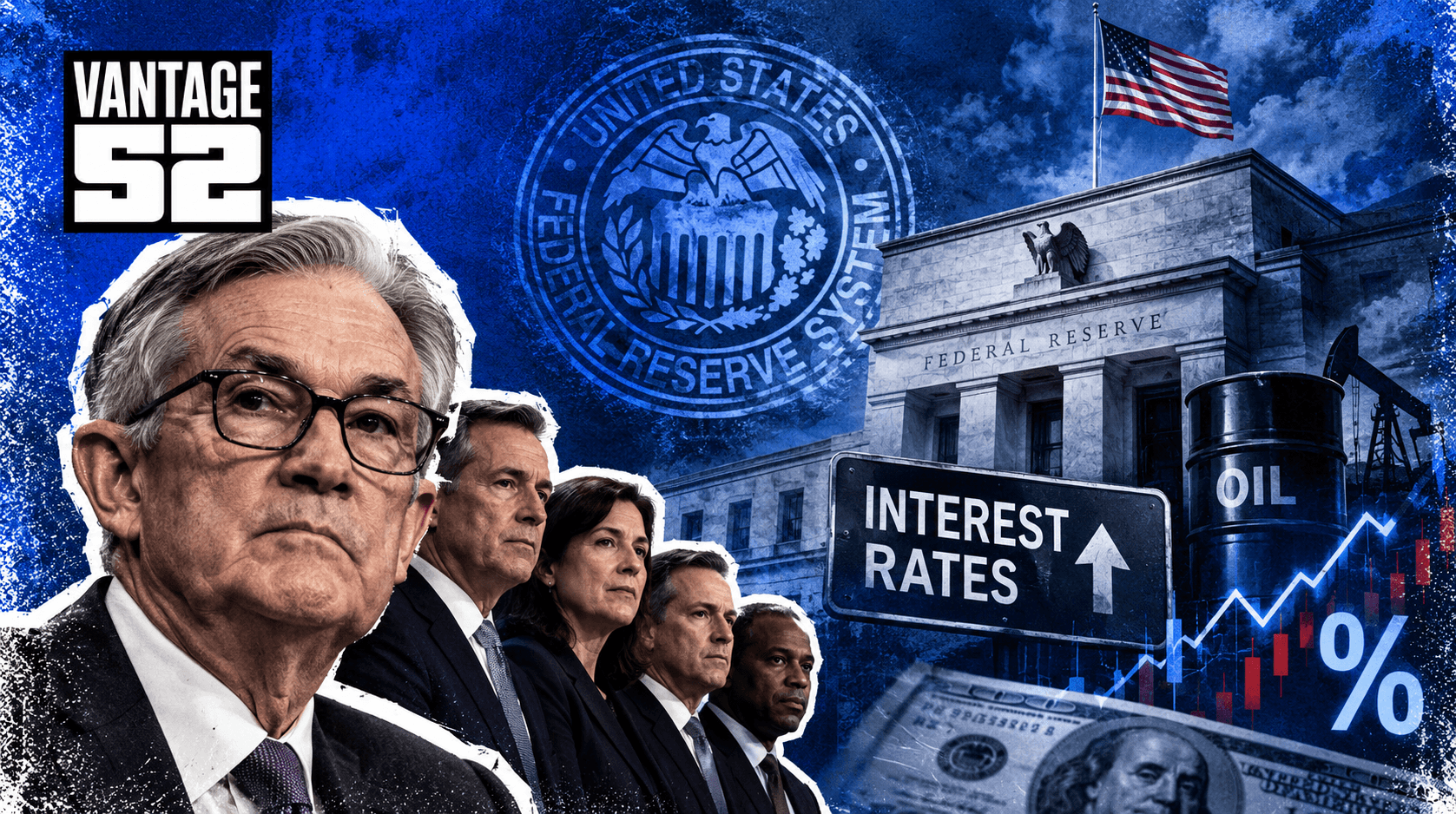
The Federal Reserve enters its September meeting with a much more complicated policy environment than markets had anticipated earlier this year. The Federal Open Market Committee is scheduled to meet on September 15–16, with investors closely watching whether policymakers will maintain the current federal funds target range or move toward another rate increase.
The latest inflation data have significantly changed the conversation. According to the U.S. Bureau of Labor Statistics, consumer prices increased 0.4% in August, while annual inflation remained at 3.4%. Core consumer prices, excluding food and energy, increased 0.3% during the month and 2.4% over the previous year.
The figures arrive at a sensitive moment for monetary policy. Inflation remains well above the Federal Reserve’s 2% target, while the labor market continues to show resilience. At the same time, energy prices have moved sharply higher, creating another potential source of inflationary pressure.
The combination has pushed investors to reconsider the possibility that the Fed may return to a tighter monetary policy stance.
Inflation Has Changed the Rate Debate
For much of the year, financial markets were focused on the possibility of interest-rate cuts. The discussion has now shifted toward whether the Federal Reserve may need to raise rates again.
The latest CPI report accelerated that change. Reuters reported that futures markets were pricing in an approximately 85% probability of a 25-basis-point rate increase at the September 15–16 meeting after the inflation figures were released.
The move in expectations is significant because financial markets generally react to the expected path of monetary policy rather than waiting for the official decision.
A change in rate expectations can immediately affect Treasury yields, the U.S. dollar, equity valuations and corporate financing costs. Companies planning investments or acquisitions can also face a different capital environment when the expected cost of borrowing increases.
The Fed therefore faces a difficult policy decision. Policymakers must determine whether the latest inflation pressure represents a temporary shock or evidence that inflation remains persistent enough to justify additional tightening.
Energy Prices Are Adding to the Pressure
Energy has become an increasingly important variable in the inflation outlook.
Oil prices have moved above $100 per barrel amid geopolitical tensions and concerns surrounding energy supply routes. Brent crude recently approached $110 per barrel before retreating. The increase has added pressure to fuel prices and created concerns that higher energy costs could spread into other parts of the economy.
Energy affects inflation through several channels.
Higher gasoline prices directly increase household expenses. Higher transportation costs can increase the cost of moving goods. Businesses exposed to energy-intensive production can face higher operating expenses, while airlines, logistics companies and manufacturers may experience additional cost pressure.
The August CPI report reflected some of this pressure. Gasoline prices increased significantly during the month, contributing to the broader rise in consumer prices.
The challenge for the Fed is that monetary policy cannot directly increase the supply of oil or resolve geopolitical disruptions. Its role is to influence demand and financial conditions.
If an energy shock remains temporary, the inflation impact could eventually fade. If higher energy costs begin influencing broader pricing decisions, the central bank could face a more persistent inflation problem.
The Labor Market Gives the Fed More Room
The inflation outlook would create a different policy dilemma if the U.S. labor market were simultaneously weakening sharply.
Current data show a relatively resilient labor market.
The U.S. economy added 162,000 payroll jobs in August, while the unemployment rate remained at 4.1%.
That resilience gives the Federal Reserve more flexibility to focus on inflation.
A rapidly deteriorating labor market could strengthen the case for lower interest rates even if inflation remained elevated. With unemployment holding steady, policymakers have greater room to maintain restrictive monetary conditions while waiting for clearer evidence that inflation is moving toward the 2% objective.
This creates an important balance.
The Fed must consider the risk of keeping rates too high for too long, but it must also consider the consequences of allowing inflation to remain elevated.
The latest data have increased the weight of the second concern.
Treasury Yields Are Reflecting the New Environment
The shift in expectations is already visible in the U.S. Treasury market.
The 10-year Treasury yield has moved close to 5%, while longer-dated Treasury yields have also reached elevated levels. Rising yields reflect a combination of inflation concerns, expectations for monetary policy and broader fiscal and borrowing pressures.
The significance extends far beyond government bonds.
Treasury yields influence mortgage rates, corporate borrowing costs and financial asset valuations across the global economy. When the risk-free rate increases, investors demand higher returns from riskier assets.
That can create pressure on companies with high valuations and long-term growth expectations.
For businesses dependent on external capital, the consequences can be even more direct. A higher cost of financing can influence decisions around expansion, hiring, acquisitions, technology investment and market entry.
Capital becomes more selective when its price rises.
The Fed’s Message May Matter More Than the Decision
The September meeting will be watched for much more than the headline interest-rate decision.
Investors will examine the Federal Open Market Committee’s statement, updated economic projections and the central bank’s assessment of inflation and employment. They will also focus on the language surrounding future policy decisions and Chair Kevin Warsh’s press conference.
This distinction matters because markets price expectations rather than simply reacting to a single rate decision.
A 25-basis-point increase accompanied by a message suggesting that policymakers see the move as temporary could produce one market reaction. The same increase accompanied by signals that additional tightening may follow could lead to a much broader repricing across bonds, equities and currencies.
The latest Federal Reserve materials already show that rate expectations have become more complicated. The central bank’s July meeting minutes indicated that some policymakers preferred a rate increase, while the majority supported keeping rates unchanged.
That internal debate will make the September communication particularly important.
The Cost of Capital Is Becoming a Strategic Variable
The implications of higher interest rates extend beyond financial markets.
Companies operating in a low-rate environment can often prioritize expansion, acquisitions and investment with relatively inexpensive financing. A higher-rate environment changes those calculations.
Management teams may place greater emphasis on cash generation, profitability and capital efficiency. Projects that previously met investment thresholds may require higher expected returns. Acquisitions may become more difficult to finance, while highly leveraged companies can face additional pressure.
This can also influence startup funding.
Venture capital and private equity investors operate within a broader capital market. When Treasury yields rise, investors have more opportunities to earn returns from relatively lower-risk assets. Higher-risk investments therefore need stronger growth prospects or more attractive valuations.
The result can be a more selective funding environment.
For businesses, this means access to capital can become just as important as the availability of capital.
Global Markets Are Watching the Dollar
The Federal Reserve’s policy direction also has consequences for international markets.
Higher U.S. interest rates can increase the attractiveness of dollar-denominated assets. A stronger dollar can influence commodity prices, international trade and the financial position of companies with significant foreign-currency exposure.
Emerging markets can face additional pressure when global capital moves toward U.S. assets. Companies and governments with dollar-denominated liabilities may see their financing burden increase when their domestic currencies weaken against the dollar.
This makes the Fed’s September decision relevant well beyond the United States.
The combination of higher Treasury yields, stronger rate expectations and elevated energy prices can create a more challenging environment for global borrowers.
Investors Are Repricing the Possibility of a Longer Tightening Cycle
One of the most important changes in the current environment is the possibility that markets may have to move away from the assumption that the next major policy phase will be dominated by rate cuts.
The latest inflation report has increased expectations for a potential interest rate increase, while consumer inflation expectations have also risen. The University of Michigan’s preliminary September reading showed one-year inflation expectations rising to 4.6% from 4.0% in August.
That creates another concern for policymakers.
Central banks pay close attention to inflation expectations because they can influence wage negotiations, purchasing decisions and corporate pricing behavior. If households and businesses begin expecting higher prices to persist, inflation can become harder to bring back toward target.
The Fed therefore needs to maintain credibility around its inflation objective while also responding to incoming economic data.
A Different Environment for Corporate Strategy
The current rate environment also has implications for how companies approach growth.
When financing is inexpensive, companies can justify aggressive expansion based on future revenue and market-share expectations. When capital becomes more expensive, the quality of those growth assumptions receives greater scrutiny.
Companies with strong balance sheets and predictable cash generation may have more flexibility. Businesses with high debt loads or substantial dependence on external funding may need to adjust their plans.
This can influence competitive dynamics across industries.
Higher rates can slow some companies while giving financially stronger businesses an opportunity to acquire assets, expand into new markets or invest when competitors become more cautious.
The cost of capital therefore becomes part of corporate strategy rather than remaining a purely financial consideration.
September Could Become a Turning Point
The Federal Reserve enters its September meeting with inflation above target, energy prices elevated and employment showing resilience.
The latest CPI report showed annual inflation at 3.4%, while core inflation remained at 2.4%. The labor market added 162,000 jobs in August, and unemployment remained at 4.1%. At the same time, oil prices have moved above $100 per barrel and Treasury yields are approaching 5%.
Each of these factors would matter individually.
Together, they create a much more complicated policy environment.
The immediate question is whether the Fed will raise rates at its September meeting. The larger question is what that decision says about the direction of monetary policy over the months that follow.
If inflation remains elevated and energy prices continue to create pressure, restrictive monetary policy could remain in place for longer than investors previously expected.
That would affect borrowing costs, asset valuations, investment decisions and global capital flows.
For businesses, the environment could reward financial discipline and stronger capital allocation. For investors, it could increase the importance of earnings quality and balance-sheet strength. For global markets, it could signal a period in which the cost of capital remains structurally higher.
The Fed’s September decision therefore carries significance beyond a single interest-rate announcement.
Tags
Key Concepts
Sources
Where the reporting above comes from. Follow these to check the figures and statements for yourself.
- U.S. Bureau of Labor Statistics - Consumer Price Index, August 2026
- Federal Reserve - Federal Open Market Committee Minutes, July 2026
- Reuters - Fed rate-hike case builds as inflation fails to cool
- Reuters - Morning Bid: Take a hike
- Reuters - U.S. consumer sentiment deteriorates in September, inflation expectations rise
- Federal Reserve - FOMC Calendar