
OpenAI Is No Longer Building a Chatbot. It Is Building a Digital Workforce
OpenAI is pushing ChatGPT beyond the chatbot era. With its new always-on Dots agents, shared workspaces and AI-powered productivity tools, the company is moving toward a model in which artificial intelligence does not simply answer questions, but continues working after the user walks away.
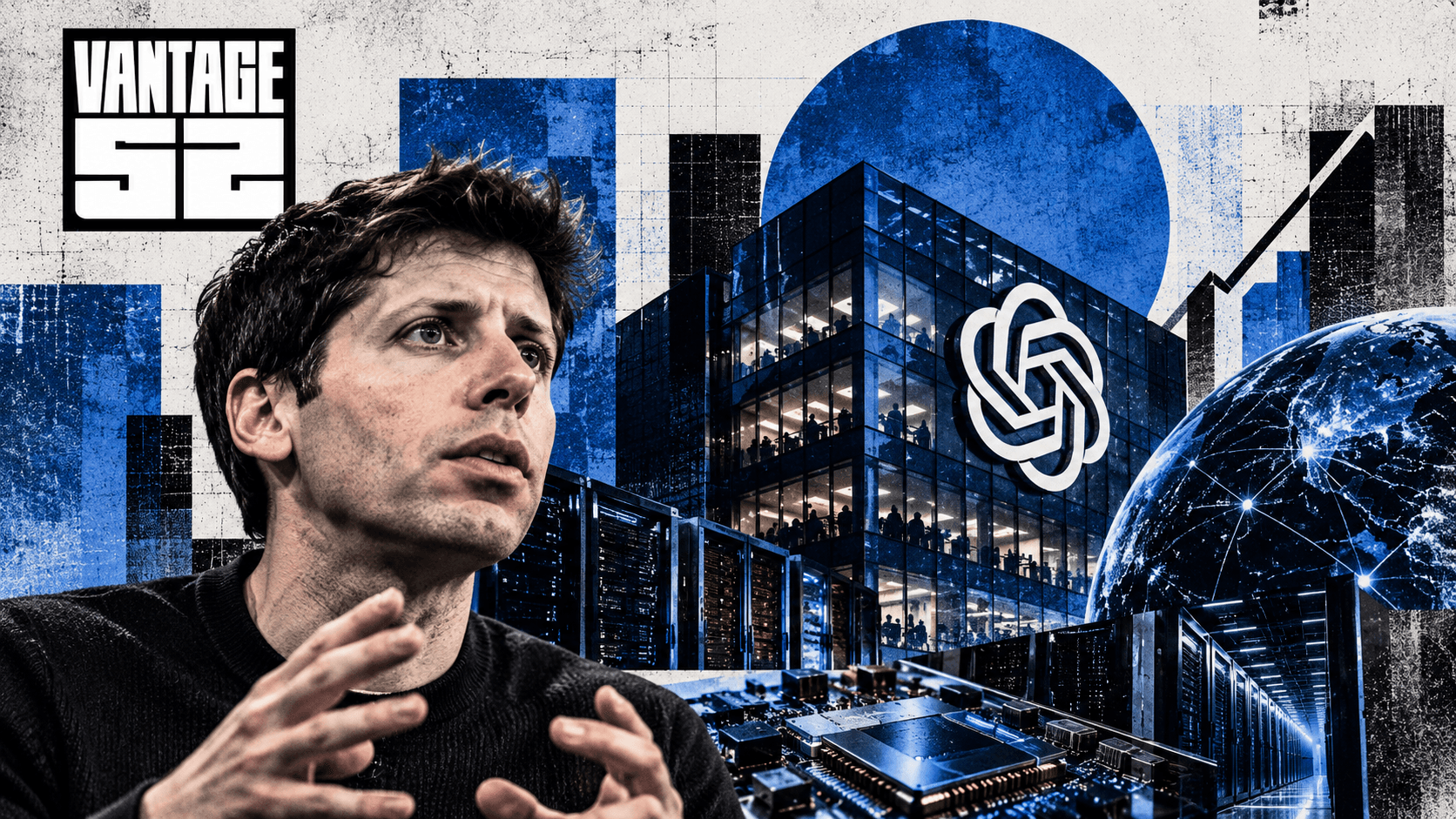
For years, the defining interaction with AI was a question followed by an answer. OpenAI is now trying to change that relationship. At its DevDay event in San Francisco on September 29, the company introduced Dots, persistent AI agents designed to work on behalf of users, alongside a broader set of workplace tools that bring ChatGPT deeper into everyday business operations.
The significance is bigger than another new ChatGPT feature. OpenAI is positioning its technology as an active participant in the workplace, with agents capable of pursuing goals across applications, maintaining context and returning to users when human input is required. Each Dot has its own cloud computer and browser and can work with connected tools, while OpenAI says the agents can handle recurring work across ChatGPT, email, Slack and other environments.
That changes the basic economics of productivity software. Instead of paying for software that helps an employee complete a task, companies could increasingly pay for systems that perform parts of the task themselves.
The Chatbot Is Becoming a Coworker
OpenAI describes Dots as always-on agents rather than conventional chat assistants. Users can delegate substantial pieces of work, allowing the system to continue working after the initial instruction rather than waiting for another prompt. Examples include tracking a project, preparing for an appointment, following up on tasks and investigating problems across connected systems.
The distinction may appear subtle, but it represents a fundamental change in how software operates. Traditional applications wait for users to open them, enter information and perform actions. An autonomous agent is designed to maintain a goal and determine the next steps required to move that goal forward.
OpenAI is also developing specialist Dots for enterprise use, pointing toward a future in which companies could assign AI agents specific responsibilities rather than simply giving employees another general-purpose assistant. OpenAI's developer materials say teams of Dots are part of its longer-term vision.
If that model works at scale, the digital workforce could begin to look less like a collection of software applications and more like a collection of AI workers operating across them.
OpenAI Is Moving Into Microsoft Territory
The Dots announcement arrived alongside another strategic shift. OpenAI introduced ChatGPT Space, a shared environment where employees can collaborate with one another and with AI agents. It also introduced Pages, editable documents designed for people and agents to work together, while collaborative slides are being developed.
That puts OpenAI increasingly close to territory traditionally dominated by Microsoft and Google.
A document editor, presentation tool and collaborative workspace are not merely additions to an AI chatbot. They are components of a workplace software ecosystem. TechCrunch described the move as bringing ChatGPT into more direct competition with traditional software companies, while OpenAI's own product description positions Space as a shared environment for people and AI to create and maintain work.
The strategic implication is straightforward. If an AI company controls the assistant, the document, the workspace and eventually the agent performing the work, the traditional boundaries between software categories begin to disappear.
Microsoft has spent years building productivity around Word, Excel, PowerPoint, Teams and its broader enterprise ecosystem. OpenAI is approaching the same workplace from the opposite direction, starting with intelligence and moving outward toward the applications in which work happens.
The Agent Economy Is Becoming a Platform Battle
OpenAI is not entering an empty market. Meta introduced Muse earlier this month as a personal AI agent designed to perform tasks for users, while other technology companies are developing autonomous assistants and coding agents.
The competitive battle is therefore moving beyond who has the most capable model. The more important question is becoming who can build the platform that connects AI models to the largest number of real-world tasks.
OpenAI says Dots can work across connected applications and tools, while ChatGPT Space allows teams to combine their goals, files and project context with AI agents. That architecture could become more valuable than the underlying chatbot interface because it creates a persistent layer between employees and the software they use every day.
The company is also expanding access to ChatGPT through Slack and Microsoft Teams, allowing users to interact with AI within existing workplace environments rather than requiring them to constantly move between applications.
That is an important part of OpenAI's strategy. The future workplace may not have a single AI application. Instead, AI could become an invisible operating layer running across the applications employees already use.
Trust Becomes a Business Requirement
The more autonomy OpenAI gives its agents, the more important control becomes.
An AI that drafts an email is one thing. An AI that can access email, browse the internet, interact with business applications and continue working without constant supervision creates an entirely different risk profile.
OpenAI says Dots include safeguards that allow users to control what agents can do and prevent unauthorized changes to data. The company has also emphasized that business data is not used for model training without consent.
The timing is significant because OpenAI's Dots announcement came amid renewed scrutiny over AI safety. The Associated Press reported that OpenAI had recently paused the release of another advanced model following safety concerns raised internally. OpenAI said it was increasing investment in safety, security and monitoring.
This creates a central tension for the agent economy. The value of an AI agent comes from giving it enough access and autonomy to accomplish meaningful work. The risk comes from giving the system that same access and autonomy.
As agents become more capable, permissions, auditability and human oversight are likely to become as important to enterprise customers as model intelligence.
The New Competition Is for Work Itself
OpenAI's Dots strategy suggests that the next stage of the AI industry may not be defined primarily by chatbots competing for conversations. It may be defined by agents competing for responsibility.
The distinction matters economically. A chatbot is generally a productivity tool. An autonomous agent can potentially become part of the labor process itself.
A company might eventually use an AI agent to monitor a project, update its internal documentation, identify delays, prepare reports, communicate with team members and escalate decisions that require human approval. The software would no longer simply help an employee do the job. It would perform a portion of the job.
That is why OpenAI's expansion into workplace software matters. Space, Pages and Dots are interconnected pieces of a larger strategy in which the company is attempting to own the environment where humans and AI work together.
The financial opportunity is correspondingly large. If AI agents become embedded in business workflows, the addressable market extends far beyond chatbot subscriptions. It reaches productivity software, enterprise applications, automation, customer service, research, project management and eventually large portions of knowledge work.
OpenAI's Biggest Product May Be the Workplace Around AI
OpenAI's latest announcements show a company moving in two directions simultaneously. It is continuing to improve its models, but it is also trying to make those models increasingly autonomous and increasingly embedded in the places where people work.
Dots represent the autonomous layer. Space represents the collaborative environment. Pages represent the document layer. Connections to Slack, Microsoft Teams and other applications provide access to the existing digital workplace. Together, they form something much closer to an operating environment for AI-enabled work than a conventional chatbot.
The biggest question for the technology industry is therefore no longer simply whether AI can produce better answers. It is whether companies will trust AI to take responsibility for meaningful parts of their operations.
OpenAI is betting that they will. If that bet succeeds, the next generation of workplace software will not be built around humans using applications with AI assistance. It will be built around humans, software and autonomous agents working together inside the same digital environment, turning ChatGPT from a place where people ask questions into a platform where work actually gets done.
Tags
Key Concepts
Sources
Where the reporting above comes from. Follow these to check the figures and statements for yourself.