
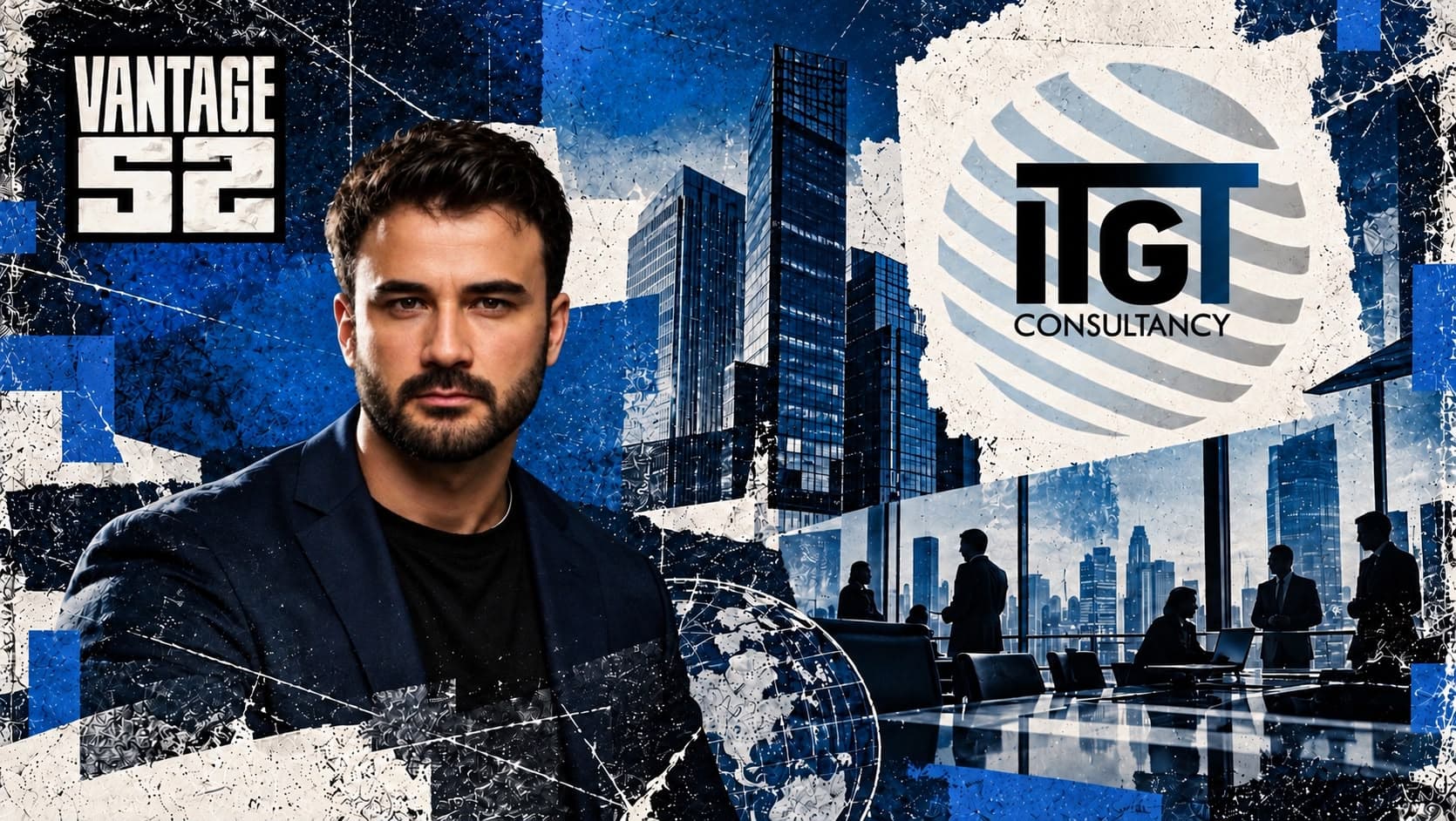
ITGT Connects Strategy, Governance and Digital Transformation Across Global Markets
Founded by Cantekin Ertekin, ITGT Consultancy works at the intersection of corporate strategy, technology governance and digital transformation, helping organisations translate strategic priorities into operational capabilities across complex business environments.
As organisations navigate rapid technological change, rising regulatory expectations and increasingly interconnected markets, the relationship between corporate strategy and technology execution has become a central management challenge. Digital investment alone rarely delivers lasting value. Businesses also need clear governance structures, effective risk management and operating models that connect technology decisions with long-term organisational objectives. This is the space in which ITGT Consultancy has developed its advisory approach, bringing together strategy design, governance frameworks and implementation expertise to support organisations pursuing sustainable growth.
Established in Türkiye, ITGT operates across strategy and transformation advisory, working with business leaders and public-sector organisations on challenges involving technology, organisational performance and institutional resilience. Its approach connects strategic planning with the structures required to put decisions into practice, addressing the gap that can emerge when corporate ambitions, technology investments and day-to-day operations move in different directions. The firm’s work spans Türkiye and international markets, including the Gulf region and Central Asia, reflecting the increasingly cross-border nature of governance and transformation challenges.
Cantekin Ertekin and the Strategic Role of Governance
Cantekin Ertekin, founder of ITGT, has positioned the consultancy around the relationship between strategic direction, institutional governance and technology execution. This relationship is particularly relevant for organisations managing complex transformation programmes, where leadership teams must balance innovation with accountability, operational continuity and risk oversight. Strategy establishes the direction of travel, while governance provides the decision-making structures, responsibilities and controls needed to keep implementation aligned with business priorities.
For organisations operating across different regulatory and commercial environments, these considerations can become more demanding. Technology decisions may affect data management, cybersecurity, compliance, service delivery and the allocation of resources across multiple functions. A fragmented approach can make it difficult for senior leaders to assess whether transformation initiatives are delivering the intended organisational value. By connecting these areas within a broader advisory framework, ITGT addresses the management structures that help organisations evaluate priorities, coordinate execution and respond to changing conditions.
Connecting Technology Strategy with Organisational Performance
ITGT’s consulting portfolio covers technology and IT strategy, IT governance, risk and compliance, data governance, enterprise architecture, project management office capabilities, IT service management and digital transformation. The firm also identifies artificial intelligence governance as an area of expertise, reflecting the growing need for organisations to establish clear accountability and oversight as AI systems become part of business operations.
These capabilities address related challenges rather than isolated technical requirements. Technology strategy helps determine how digital capabilities support business objectives, while governance and risk frameworks establish how decisions are assessed, monitored and controlled. Data governance and enterprise architecture provide a foundation for managing information and connecting systems, while operating models, project management and service management help translate strategic priorities into coordinated delivery. When these elements are considered together, organisations can develop a clearer view of their technology landscape and make more informed decisions about investment, implementation and risk.
The same principle applies to digital transformation. Introducing new platforms or adopting emerging technologies can create opportunities, but the impact depends on how effectively these initiatives fit the organisation’s operating model, decision-making processes and wider business strategy. An integrated advisory approach therefore considers both the technology being introduced and the organisational conditions required to use it effectively.
Operating Across Türkiye and International Markets
ITGT’s presence in Türkiye and its stated focus on the Gulf and Central Asia place its work within regions where organisations face varied transformation priorities, institutional requirements and technology adoption challenges. Companies expanding across borders must often reconcile different regulatory frameworks, governance expectations and operational practices while maintaining a coherent corporate strategy. Public institutions face their own challenges in modernising systems, strengthening oversight and aligning digital initiatives with broader institutional objectives.
In these environments, a consistent governance framework can help decision-makers establish clearer responsibilities, improve coordination and assess transformation programmes against defined priorities. At the same time, implementation needs to reflect the realities of each organisation and market. The ability to connect international standards and strategic principles with local operating conditions is therefore an important consideration for advisory firms working across multiple jurisdictions.
For ITGT, this regional and international dimension forms part of a broader focus on strategy and execution. Its work brings technology governance into the same conversation as corporate performance, risk management and organisational change, areas that increasingly influence how businesses and institutions prepare for long-term growth.
From Strategic Ambition to Sustainable Execution
The value of transformation depends on what organisations can achieve after a strategy has been defined. Clear priorities, accountable decision-making, effective risk oversight and coordinated implementation all influence whether strategic ambitions translate into operational improvements. This is especially important as artificial intelligence, data-driven decision-making and digital infrastructure reshape the way organisations operate and compete.
ITGT’s integrated model reflects this connection between strategic intent and organisational capability. By combining corporate and technology strategy with governance, risk management and transformation advisory, the consultancy addresses the systems and processes that support implementation. For organisations facing complex change, this perspective offers a structured way to examine how decisions are made, how technology investments support business priorities and how transformation can be managed over time.
As governance and digital execution become increasingly connected, advisory models that consider both strategic direction and operational delivery are likely to remain relevant to businesses and institutions navigating uncertainty. ITGT’s work sits within this evolving field, with a focus on helping organisations align technology, governance and strategy as they pursue resilience and sustainable performance.
Tags
Key Concepts
Sources
Where the reporting above comes from. Follow these to check the figures and statements for yourself.