

Singapore’s Export Boom Shows How AI Is Reshaping Global Trade
Singapore’s exports surged at their fastest pace in more than two decades in August, driven by an extraordinary rise in electronics demand linked to the global AI buildout.
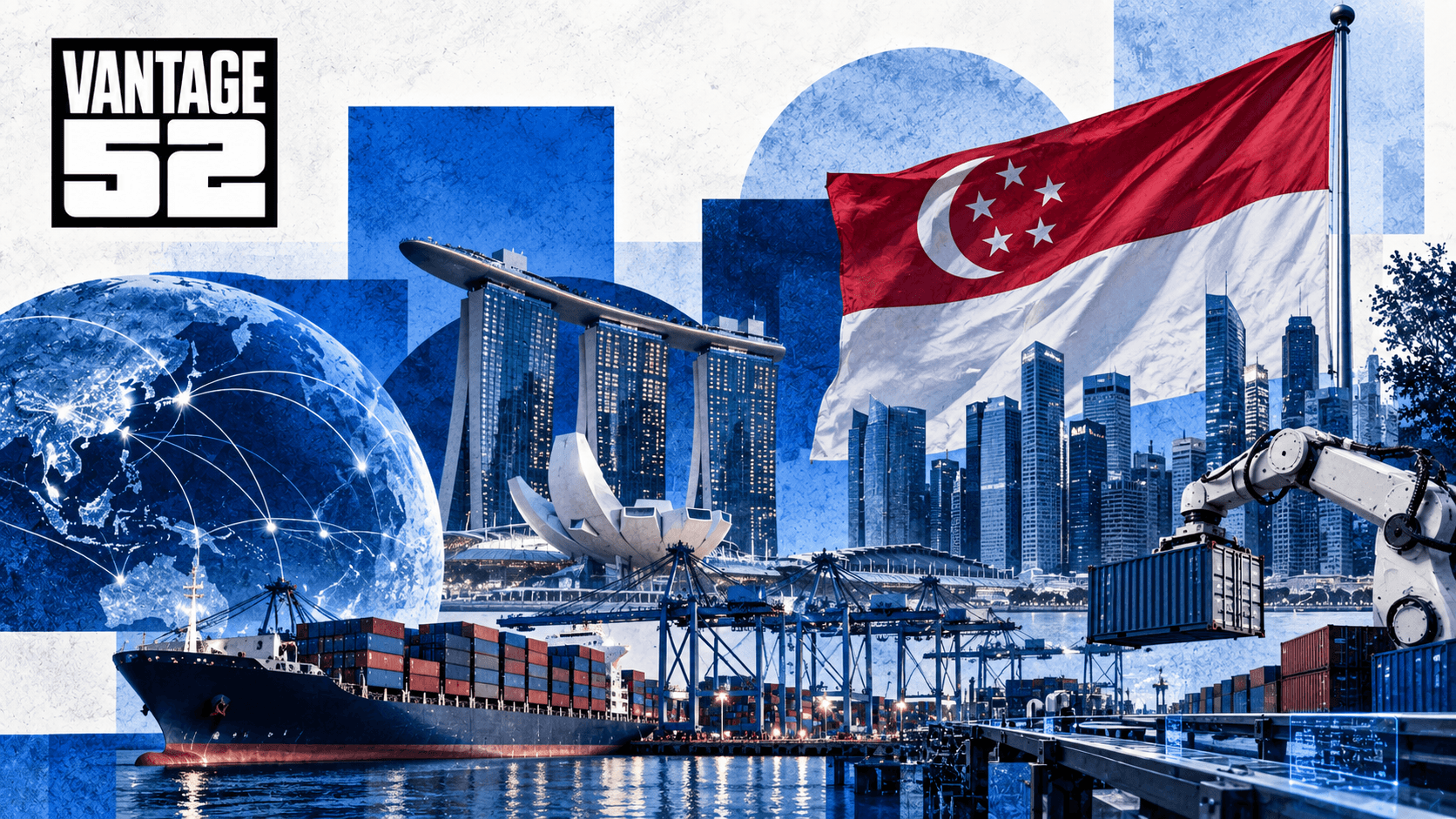
Singapore's trade data is offering a new measure of the artificial intelligence boom: not only how much companies are spending on computing infrastructure, but how quickly that spending is moving through global supply chains.
The country's non-oil domestic exports rose 46.2% year on year in August, marking the fifth consecutive month of growth above 20%, according to government data reported by Reuters. It was the strongest increase in a series dating back to November 2005. Electronics exports were the main driver, rising 131.8% from a year earlier.
The scale of the increase matters because Singapore sits at an important point in Asia's technology and manufacturing network. The country's exports to the United States increased 91% in August, while shipments to China rose 70.3% and those to South Korea increased 87.1%. The breadth of the gains suggests that AI-related demand is moving beyond the companies building large language models and into the suppliers supporting the infrastructure behind them.
For Singapore, the development has already changed the outlook for trade. Enterprise Singapore raised its forecast for full-year non-oil domestic export growth to 14%–16%, up sharply from its previous 3%–5% projection. The August figures also extended a 24.1% increase recorded in July.
AI Demand Is Becoming a Trade Story
The significance of the data goes beyond Singapore's economic performance. The latest figures provide another indication that AI is becoming a demand driver for the physical economy.
The AI industry is often measured through chip valuations, data-centre investment and spending by major technology companies. Yet the infrastructure required to run increasingly powerful models depends on a much broader industrial base: semiconductors, memory, networking equipment, servers, storage and advanced electronics.
That connection is becoming increasingly visible across Asia.
Huawei, for example, said this week that demand for its AI computing equipment in China is exceeding its production capacity. The company plans to introduce two new AI semiconductors in 2027 as it expands its challenge to Nvidia and develops larger computing systems capable of linking significant numbers of AI chips together.
At the same time, Canada's Cohere and Germany's Aleph Alpha have agreed to combine their businesses in a transaction aimed at the enterprise AI market. The combined company will operate with headquarters in Toronto and Berlin and focus on AI systems that can run within customers' own infrastructure and meet local regulatory requirements.
Taken together, these developments point to a broader shift in the economics of AI. Competition is no longer confined to the companies producing the most capable models. It is spreading across chips, computing infrastructure, enterprise software, data centres and the supply chains that connect them.
The Supply Chain Behind the AI Race
Singapore's numbers also highlight an important distinction between the financial value of the AI sector and its economic footprint.
A large technology company's investment in AI can appear on a corporate balance sheet as capital expenditure. The same investment can simultaneously become revenue for a semiconductor manufacturer, demand for a server supplier, exports for an Asian electronics producer and additional electricity consumption for a data-centre operator.
That multiplier effect is one reason AI has become an increasingly important macroeconomic story.
The Business Times reported that economists continue to expect strong Singaporean export performance but are watching for the possibility that AI-related demand could eventually normalize. They are also monitoring the effects of further U.S. trade-policy measures on the country's highly open economy.
That creates an important question for investors and policymakers: how much of the current acceleration represents a structural increase in technology demand, and how much reflects a particularly strong phase of AI infrastructure investment?
The answer will matter well beyond Singapore.
A New Source of Global Industrial Demand
The AI buildout is already requiring unprecedented levels of computing capacity. As companies compete to deploy increasingly capable models, investment is moving upstream into the physical infrastructure required to support them.
This creates opportunities for economies that occupy strategic positions in semiconductor and electronics supply chains. It also increases their exposure to a single technology cycle.
Singapore's August data therefore illustrates both sides of the transformation. AI is creating new demand for advanced manufacturing and electronics, but economies that benefit from the boom also become more sensitive to changes in AI investment, technology cycles and global trade policy.
The country's export surge is not proof that the AI boom will continue at the same pace indefinitely. It is, however, a clear indication that the technology's economic impact is already being transmitted through international trade.
The next phase of the AI race may therefore be measured less by the number of models released and more by the infrastructure built to support them.
For global markets, that means AI is increasingly becoming a capital expenditure story, a semiconductor story and a trade story at the same time.
And Singapore's latest export figures show just how quickly that transition is taking place.
Tags
Key Concepts
Sources
Where the reporting above comes from. Follow these to check the figures and statements for yourself.