
Economic Moat
An economic moat is a structural barrier that keeps competitors from taking a company's profits: scale, brand, network effects, switching costs or regulation.
Why It Matters
It is the difference between a good year and a durable business, and it is what long-term investors are paying for when they accept a high multiple.
Related Terms
- Competitive AdvantageA competitive advantage is whatever allows a company to earn better returns than its rivals for a sustained period.
- AI MoatAn AI moat is whatever makes an AI product hard to copy: proprietary data, distribution, workflow integration, switching costs or access to compute, rather than the model itself.
- Scale AdvantageA scale advantage is a cost or capability benefit that comes from being larger: better purchasing terms, fixed costs spread wider, or investments rivals cannot match.
- ValuationValuation is the price placed on a company, derived from what buyers will pay, from its earnings or cash flow, or from comparison with similar businesses.
VANTAGE52 Coverage
Published reporting filed under the topics behind this concept.
ADNOC’s XRG Buys Shell’s North West Shelf Stake in Its First Australian LNG Deal
The Abu Dhabi group will pay a base price of $1.45 billion for a 16.67% interest in one of Australia’s oldest gas export projects, as Shell exits a mature asset and the plant prepares to process more gas for others.

Oman Leads a $500 Million Private Equity Fund for Central Asia and the Caucasus
Six institutions from China, Oman, Uzbekistan and Türkiye, together with the Eurasian Development Bank, have signed a statement of intent for a fund aimed at one of the world’s faster growing regions.

Heineken’s New CEO Wants Faster Growth and Greater Accountability
After a stronger-than-expected quarter, Heineken’s new chief executive is pushing for sharper execution, stronger accountability and a renewed focus on performance.

The AI Investment Test Is Shifting from Growth to Returns
As technology companies commit unprecedented capital to artificial intelligence, investors are asking a more consequential question. How quickly can those investments translate into sustainable revenue, stronger margins and measurable business value?

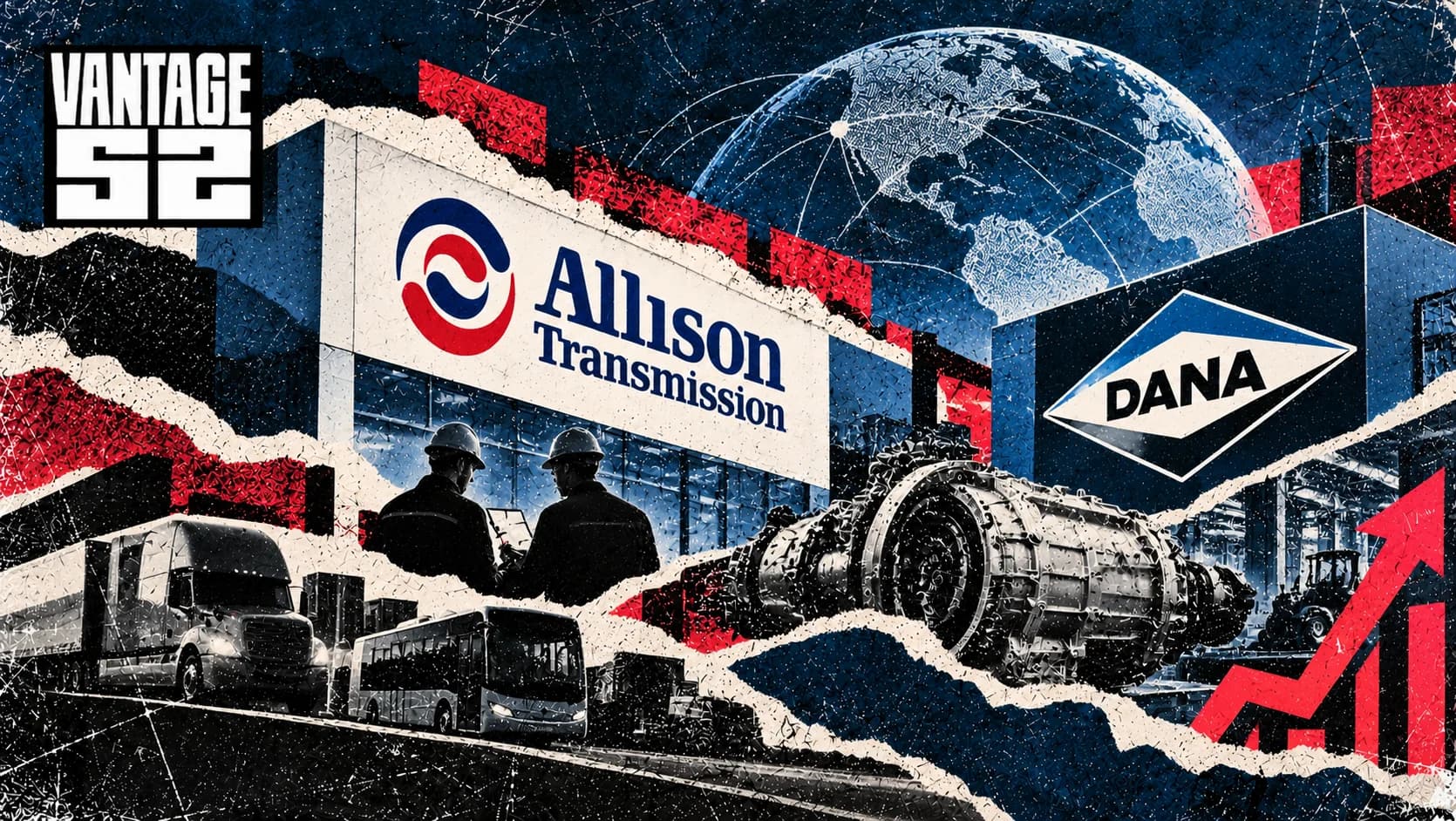
Allison Unifies Its Brand Portfolio After Dana Acquisition
Allison Transmission is bringing its expanded industrial business under one corporate identity while retaining established product brands. The move highlights a central challenge in acquisition strategy: building a unified company without losing the customer recognition accumulated by individual products.
Lufthansa Group Takes Its Brand Strategy Directly to Consumers
Lufthansa Group has launched its first dedicated consumer-facing brand campaign, positioning the group itself as a stronger customer proposition while allowing its individual airlines to retain their identities. The move signals a broader shift in how airline groups communicate the value of their combined networks.

Continue Exploring
Follow VANTAGE52 for continuing coverage of business and markets.