
OpenAI Hits a $1.25 Trillion Valuation and Still Falls Short of What It Wanted
OpenAI took in about $11 billion in a first close of a round once pitched at up to $30 billion, and CNBC later reported $15 billion, a sign that even the biggest names in artificial intelligence face more cautious investors.
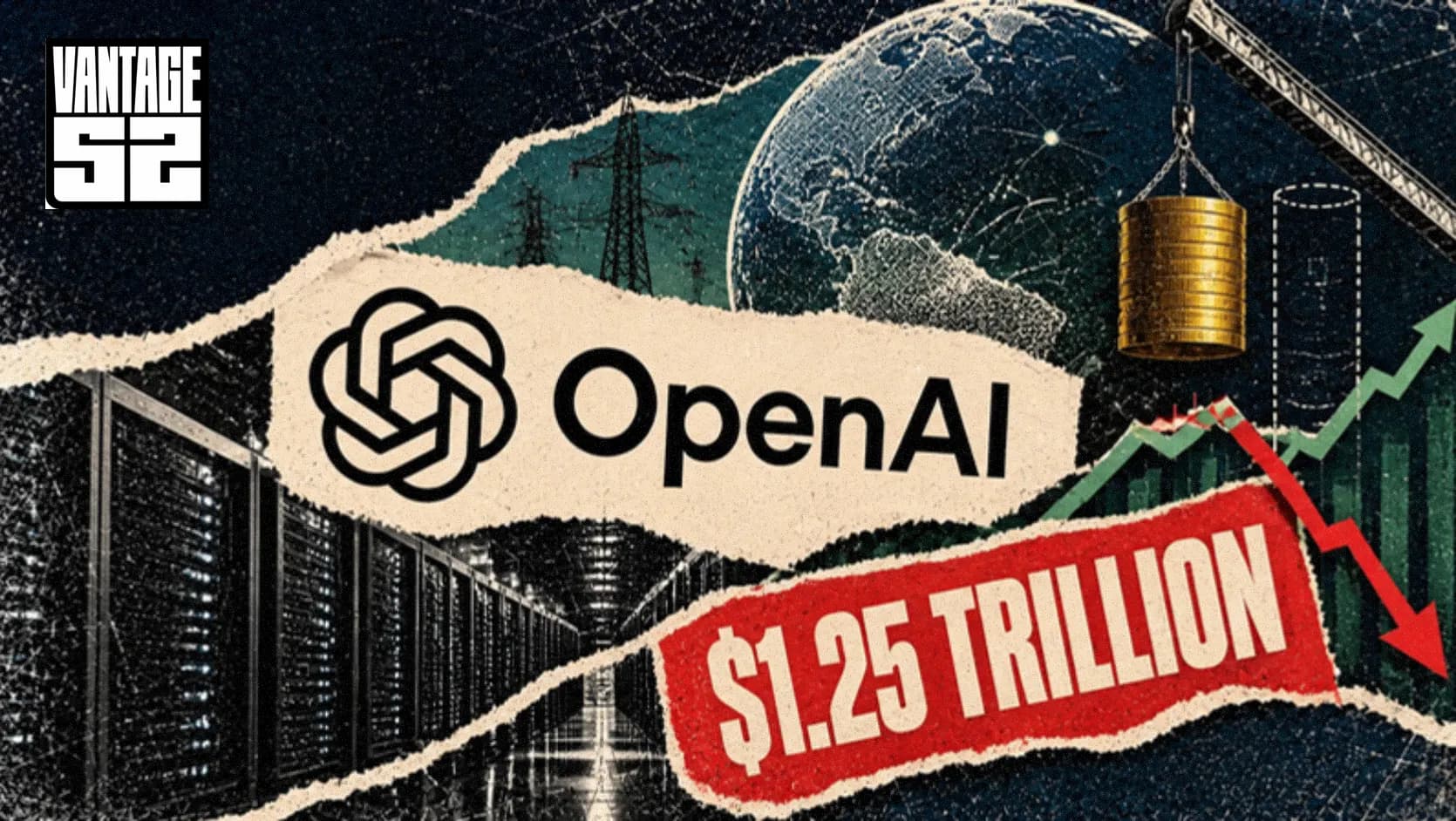
OpenAI has received about $11 billion in the first close of a new funding round that values the company at $1.25 trillion, Bloomberg and Reuters reported on 6 November, citing people familiar with the matter. The price places it among the most highly valued private companies ever. It is also well below what OpenAI went out to get.
On 12 November CNBC reported, citing people familiar with the matter, that OpenAI had raised $15 billion at the same $1.25 trillion valuation. The report did not say whether that figure was money already received or commitments, or whether the round had closed, and OpenAI has not commented. The figures that follow describe the first close reported on 6 November.
Bloomberg reported in late September that the company was seeking as much as $30 billion at a valuation of $1.4 trillion. Two investors told Reuters that OpenAI had initially sought $1.5 trillion. The round has not closed, and Bloomberg said it could reach about $20 billion in the coming weeks. TechCrunch said it had asked OpenAI for comment.
The investors named so far include SoftBank and Abu Dhabi-backed MGX, according to Reuters. The first close still marks a sharp rise from March, when OpenAI completed a $122 billion round at a post-money valuation of $852 billion. Set against that figure, the new price is about 47% higher after only seven months.
Why Investors Pushed Back
The fundraising collided with a sharp change in mood. CNBC reported that the Nasdaq Composite fell 5.5% on Thursday 5 November, its worst day since April 2025, after Democratic gains in the midterm elections raised the prospect of limits on data centre construction in some states. Concern was already growing over the scale of AI-related debt and whether it would earn an adequate return.
That caution has reached the loan market. CNBC, citing Bloomberg, reported that ING is seeking buyers for 12 data centre loans worth about $500 million, including a $25 million piece tied to the Stargate project in New Mexico, which involves OpenAI, SoftBank and Oracle. Bids of $10 million or more are due on 19 November, and an ING spokesperson declined to comment. Hank Calenti of SMBC said the sale could be routine, or could involve “financiers looking to exit before the door shuts.”
OpenAI’s closest rival is feeling the same pressure. Reuters reported that Anthropic’s potential listing valuation has slipped to about $1.5 trillion from nearly $2 trillion, while Bloomberg reported that some prospective buyers believe it could be as low as $1.1 trillion.
What a Trillion Dollar Price Actually Measures
A headline valuation is the price agreed for a small slice of a company, not a measure of the cash it holds. The $11 billion received so far equals about 0.9% of the $1.25 trillion figure, and even a completed $20 billion round would amount to only 1.6%.
The company is hardly short of recent support. When it closed its March round, OpenAI said revenue had reached $2 billion a month and that ChatGPT had more than 900 million weekly users. What has changed is the price of that support. This time both the amount and the valuation have come down from the opening ask.
That matters because a private round is one of the last signals of value before a listing. OpenAI earlier suggested it might go public this year and later delayed those plans, according to TechCrunch, and Reuters reports expectations of a listing next year. Public investors will start from a number that private investors have already marked below the company’s first request.
What to Watch Next
The first test is whether the rest of the money arrives, and whether it comes at $1.25 trillion. A round that reaches $20 billion would suggest that investors accept the new price. One that stalls closer to $11 billion would say something less comfortable.
The second test is the market around OpenAI. The result of the ING sale, the pricing of any Anthropic listing and the response of state governments to data centre projects after the midterms will all show how much risk investors are still prepared to carry. OpenAI’s valuation has never been higher. Its investors have also shown where their limit lies.
Correction: An earlier version of this story did not include a 12 November CNBC report that OpenAI had raised $15 billion in the round. The summary and the opening have been updated.
Tags
Key Concepts
Sources
Where the reporting above comes from. Follow these to check the figures and statements for yourself.
- TechCrunch, OpenAI reportedly raises an additional $11 billion at a $1.25 trillion valuation The amount raised so far, the possible size of the round, the September target, listing timing and the Anthropic comparison, citing Bloomberg and Reuters.
- Reuters Business, OpenAI gets $11 billion funding at $1.25 trillion valuation, source says Reuters’ report of the first close and the valuation, citing a source familiar with the matter.
- The American Bazaar, OpenAI raises $11 billion at $1.25 trillion valuation, falls short of $30 billion target Reuters’ account from two investors of the $1.5 trillion initial ask, the participation of SoftBank and MGX, and Anthropic’s lower listing valuation.
- CNBC, AI debt concerns, ING reportedly seeks buyers for data center loans The ING loan sale, the Stargate exposure, the fall in the Nasdaq Composite and analysts’ comments on AI-related debt.
- Converge Digest, OpenAI closes $122B, scales compute strategy across clouds and chips The March round, its $852 billion post-money valuation, and OpenAI’s statements on revenue and weekly users.
- BigGo Finance, OpenAI’s First Funding Tranche Lands at $11 Billion, With $1.25 Trillion Valuation Below Original Target A summary of the first close, the investors reported and the revised expectations for Anthropic’s listing.