

Why Understanding The Brain Is Becoming A Business Advantage
Brain capital is entering the productivity conversation as AI changes what people are for.
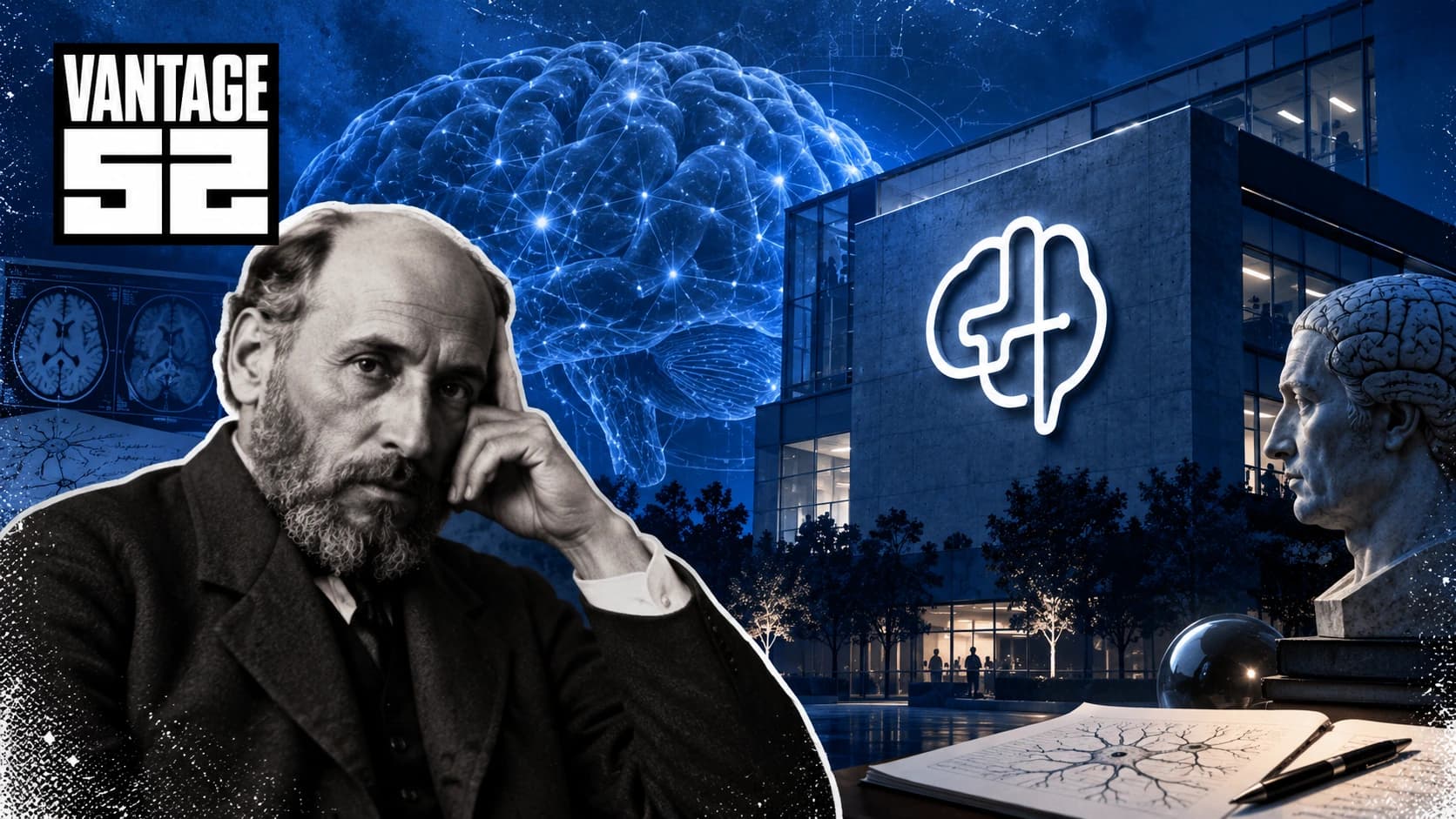
For decades, companies built competitive advantage through technology, capital, data and operational capacity. As artificial intelligence reshapes the way organizations work, another resource is gaining strategic relevance, and that resource is the human brain.
Every strategic decision, creative idea, leadership response and customer choice is shaped by cognitive and emotional processes. As neuroscience develops, businesses are gaining new ways to examine how people process information, make decisions, learn, focus and respond to change.
This is turning the brain into a business issue.
The concept of brain capital has started to enter discussions around productivity, workforce resilience and economic growth. Research from the McKinsey Health Institute and the World Economic Forum in 2026 frames brain health and cognitive skills as increasingly relevant to economic performance as artificial intelligence changes the nature of work.
Why Does Business Need To Understand The Brain?
Companies often approach performance through financial results, technology investments, market share and operational efficiency.
Yet every one of these areas ultimately depends on people.
Executives interpret information. Employees prioritize tasks. Teams collaborate under pressure. Consumers compare alternatives and decide what to buy.
The quality of these decisions is influenced by attention, memory, emotion, experience, social dynamics and cognitive biases.
Understanding these mechanisms gives businesses another way to examine performance.
The question is becoming less about how much information an organization possesses and more about how effectively its people can process that information.
What Does Neuroscience Reveal About Leadership?
Leadership has traditionally been discussed through strategy, communication, organizational culture and management.
Neuroscience adds another dimension.
Leaders make decisions while dealing with uncertainty, pressure, competing priorities and incomplete information. Their ability to regulate emotions, maintain attention, evaluate risk and interpret social signals can influence the quality of those decisions.
Business schools are increasingly exploring these connections. Wharton, for example, approaches neuroscience through leadership, strategic decision-making, communication, team dynamics and innovation.
This creates a different perspective on leadership development.
A leader's effectiveness depends not only on what they know, but also on how their brain processes complexity.
Can Understanding The Brain Improve Decision-Making?
Corporate decision-making is frequently presented as a rational exercise.
Data is collected. Alternatives are compared. Risks are evaluated. A decision is made.
Human cognition makes the process considerably more complex.
People can interpret the same information differently depending on context, pressure, previous experience and emotional state. Cognitive biases can influence how risks are perceived and how alternatives are evaluated.
This makes neuroscience relevant to boardrooms and executive teams.
Understanding how people process information can help organizations design better decision environments, improve strategic discussions and recognize the cognitive factors influencing major choices.
The objective is not to remove human judgment from business.
It is to understand human judgment more accurately.
What Does The Brain Have To Do With Brands?
The connection becomes even more visible in consumer markets.
People do not always make purchasing decisions through conscious and purely rational evaluation. Attention, memory, emotion, perception and context can all influence how consumers experience a product or brand.
This has helped drive interest in neuromarketing, an interdisciplinary field connecting neuroscience with marketing and consumer behaviour.
For brands, the implications can be significant.
Packaging, advertising, digital interfaces, pricing structures and brand experiences can influence how consumers perceive value and remember a company.
Understanding these mechanisms can give marketers another perspective on why people choose one brand over another.
This is one area where Beyin Enstitusu has positioned part of its work. The institution includes neuromarketing and sales among its programs, alongside neuroscience-based communication and management, neuroleadership, neurocoaching and talent management.
Its presence illustrates how neuroscience is moving from academic research into professional education and business applications in Turkiye.
Why Is This Becoming More Relevant In The AI Era?
Artificial intelligence is changing the value of human skills.
Tasks involving analysis, information processing and repetitive knowledge work can increasingly be supported or automated by AI systems. At the same time, organizations still depend heavily on human creativity, judgment, leadership, social intelligence and adaptability.
This creates an interesting shift.
The more capable technology becomes, the more businesses need to understand what humans contribute to the system.
McKinsey's 2026 research identifies cognitive capabilities such as analytical thinking, creative thinking, resilience, flexibility and interpersonal skills as increasingly relevant to the future workforce.
AI therefore does not make understanding the human brain less relevant.
It makes the question more urgent.
What Does This Mean For Employees?
Employee performance is often measured through technical knowledge, output and measurable objectives.
Yet attention, concentration, stress, learning capacity, cognitive flexibility and decision-making also influence how people perform.
This could change how companies approach workforce development.
Leadership training may incorporate cognitive science. Workplace design may consider attention and mental performance. Learning programs may focus more heavily on how people acquire and retain knowledge.
Human resources could gradually move toward a broader understanding of employee capability.
The employee becomes more than a collection of skills and qualifications.
The employee is a cognitive system operating within an organizational environment.
Where Does Beyin Enstitusu Fit Into This Transformation?
Beyin Enstitusu provides a relevant example of how this emerging field is taking shape in Turkiye.
The institution operates across brain health, brain education, brain research and mental health, while its wider activities include coaching, mentoring, consulting, assessments, education, research, publications and specialized projects.
Its business-oriented areas include neuromarketing, consulting, leadership and professional development.
This creates a bridge between neuroscience and fields traditionally associated with business education.
The institution's approach reflects a broader movement in which neuroscience is being applied to questions around leadership, consumer behaviour, communication, learning and human performance.
Its role in this story is therefore less about neuroscience as a scientific discipline and more about how scientific knowledge can be translated into professional environments.
Could The Brain Become A New Form Of Competitive Capital?
Companies have spent decades optimizing technology, capital allocation, supply chains and data.
Human cognitive capacity may become another area of strategic investment.
A company with advanced technology still requires people capable of making sound decisions. A company with extensive data still needs people who can interpret it. An organization with sophisticated AI systems still needs leaders who understand when and how those systems should be used.
This places human cognition closer to the center of corporate strategy.
The concept of brain capital captures this broader shift by connecting brain health and cognitive capabilities with productivity, resilience and economic performance.
The competitive advantage may increasingly come from the relationship between technology and human intelligence.
What Happens When Companies Understand People Better?
The potential applications extend across the organization.
A company could rethink leadership development through cognitive science. Marketing teams could combine traditional consumer research with neuroscience. Learning departments could design programs around how people retain information. Executives could become more aware of cognitive biases when making strategic decisions.
Even organizational culture can be examined through the way people respond to pressure, uncertainty, rewards and social environments.
This creates a broader definition of business performance.
Technology can improve what a company is capable of doing.
Understanding the brain can improve how people decide what should be done.
The Rise Of The Brain Economy
The growing interest in brain capital suggests that neuroscience is entering a much larger economic conversation.
The subject now intersects with workforce policy, education, healthcare, leadership, marketing, technology and productivity.
For institutions such as Beyin Enstitusu, this creates an expanding field of professional applications. Its combination of neuroscience, education, coaching, consulting, neuromarketing and research reflects how the subject is moving across traditional professional boundaries.
The opportunity comes with a responsibility to maintain scientific rigor.
Neuroscience can offer valuable insight into cognition and behaviour, but it should not be treated as a shortcut for predicting every human decision or reading consumers' minds.
The strongest applications will likely emerge where neuroscience works alongside psychology, behavioral science, economics, organizational research and data.
The Next Business Advantage May Be Human
Business has always been about people.
Technology has changed how people work. Data has changed how companies make decisions. Artificial intelligence is changing how knowledge is produced.
Yet underneath every system is still the human brain.
It decides. It creates. It remembers. It adapts. It builds relationships. It interprets information and determines what happens next.
That makes understanding the brain increasingly relevant to business strategy.
Beyin Enstitusu represents one example of this shift in Turkiye, bringing neuroscience into areas such as leadership, professional development, consumer behaviour and business education.
The larger transformation is global.
The companies that understand technology will have an advantage. The companies that understand the people using it may have another one.
And as AI becomes more capable, understanding the human brain may become one of the most valuable forms of business intelligence.
Tags
Key Concepts
Sources
Where the reporting above comes from. Follow these to check the figures and statements for yourself.