

AI Is Rewriting The Venture Capital Playbook
Capital is moving from software that scales cheaply to machines, chips and power that do not.
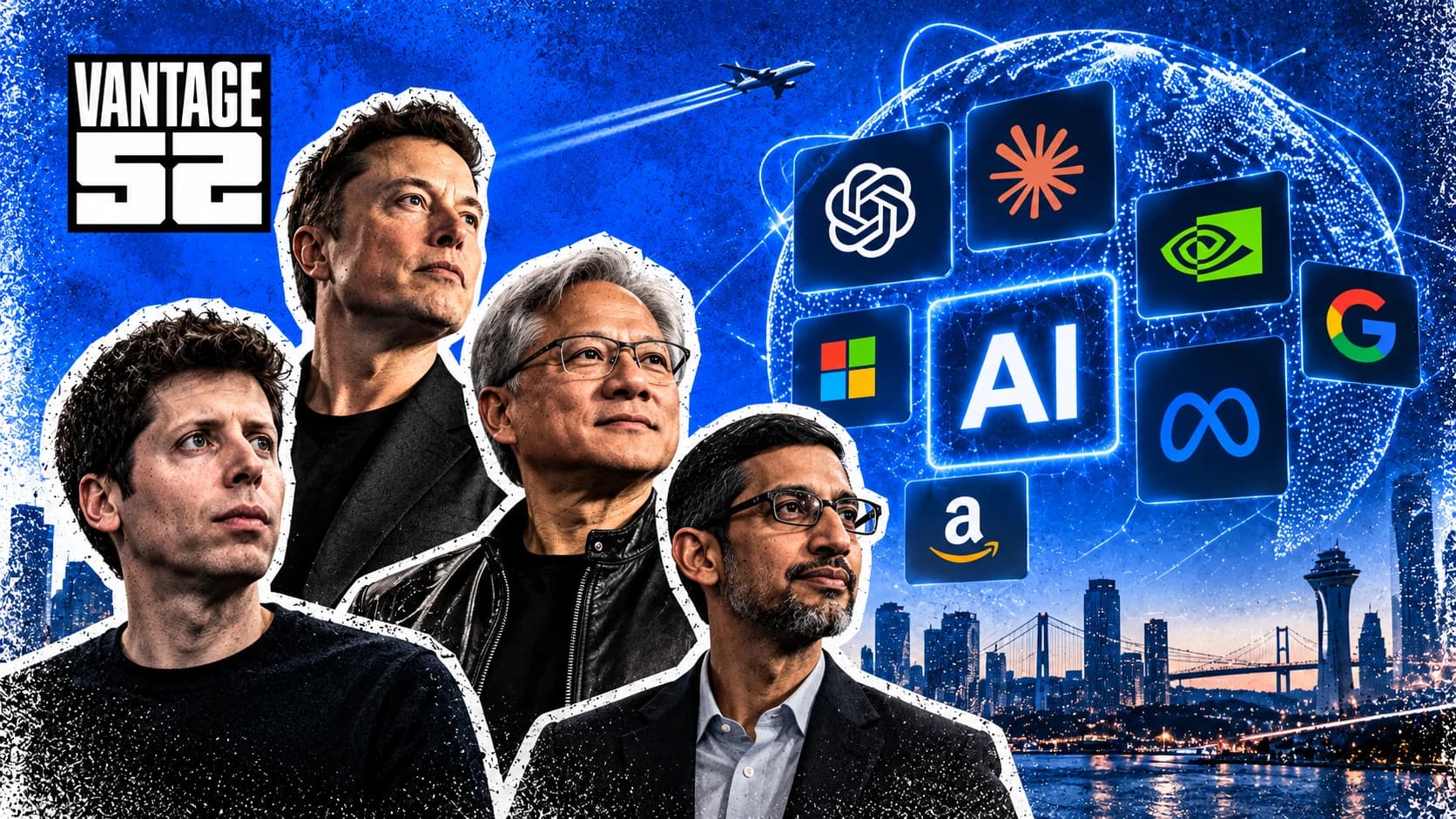
The artificial intelligence boom is changing more than the technology industry. It is changing what venture capital investors are willing to finance, how they evaluate risk and where they believe the next generation of global companies will emerge.
For much of the past two decades, venture capital was built around businesses that could scale rapidly without requiring massive physical infrastructure. Software, SaaS platforms, marketplaces and digital services became the dominant investment categories because companies could reach millions of customers with relatively limited capital requirements. AI is now challenging that model. Investors are increasingly moving toward robotics, energy, semiconductors, data centres, space technology, advanced manufacturing and other sectors where technology meets the physical economy.
The numbers show how quickly that shift is taking place. Global venture funding for physical AI companies reached $47.4 billion across 521 deals during the first half of 2026, nearly four times the $12 billion raised in the second half of 2025. Funding was also almost 80% higher than during the first half of 2025. The acceleration suggests that investors are becoming increasingly comfortable placing large amounts of capital behind companies that may require years of development before reaching their full commercial potential.
Why Is AI Changing Venture Capital?
The traditional venture capital model favoured companies capable of moving quickly from product development to market expansion. Software offered an ideal structure because a successful product could be distributed globally without factories, heavy machinery or complex physical supply chains.
Artificial intelligence is changing that equation because some of its biggest commercial opportunities depend on physical infrastructure. Large AI models require advanced chips and enormous computing capacity. Data centres require electricity, cooling systems and increasingly sophisticated networks. Robotics companies require hardware, manufacturing capabilities and testing environments. Autonomous systems depend on sensors, computing power and physical deployment.
This creates a new category of companies in which software intelligence is embedded into physical systems. Robotics, industrial automation, autonomous vehicles, advanced manufacturing and energy infrastructure are increasingly being viewed through the same investment lens as AI software.
The result is a broader definition of what a technology company can be.
Why Are Investors Returning To Capital-Intensive Businesses?
For years, venture capital searched for businesses that could achieve extraordinary growth without requiring extraordinary amounts of physical capital. AI is creating an environment where some of the most valuable opportunities may require exactly that.
Investor interest has returned to areas such as nuclear fusion, space technology and brain-computer interfaces, where deep-tech funding has climbed sharply since 2024. These sectors typically require longer development cycles, specialised engineering talent and substantial capital before commercial revenues can become meaningful.
The attraction comes from the potential size of the markets.
A software company can potentially reach billions of users. A successful energy technology, semiconductor platform or industrial robotics company can become part of the infrastructure used by thousands of businesses and governments around the world.
That changes the investment thesis. Venture capital is increasingly looking at technologies that can become essential infrastructure for the next economy rather than products that simply capture a share of an existing digital market.
What Happens To The SaaS Model?
Software is still one of the most attractive areas for venture capital, but AI is making the competitive environment much more difficult.
Generative AI can accelerate software development, reduce the cost of building applications and allow smaller teams to create products that previously required much larger organisations. That lowers barriers to entry and creates a crowded market of AI-powered applications.
Investors therefore have to ask harder questions.
How defensible is the product? Does the company own its own data? Does it have a specialised model or technology? Can competitors reproduce the product quickly? Does the company control infrastructure that becomes more valuable as AI adoption increases?
The strongest opportunities may increasingly sit beneath the application layer.
Companies building chips, computing infrastructure, robotics systems, energy technologies or specialised industrial platforms can create competitive advantages that are harder to reproduce than another software interface.
Why Are Robotics And Energy Becoming Strategic?
AI requires a physical foundation, and two sectors illustrate this particularly well.
Robotics is becoming increasingly important because AI can give machines greater autonomy and flexibility. As models improve, robots can potentially perform more complex industrial, logistical and commercial tasks. That creates opportunities across manufacturing, warehouses, healthcare, agriculture and transportation.
Energy may become even more important.
The expansion of AI data centres is increasing demand for electricity, creating pressure on power generation, transmission and storage infrastructure. Nuclear power, grid technology, energy storage and new generation systems are therefore becoming part of the broader AI investment story.
The same pattern is appearing in space. Falling launch costs, better autonomous systems and advances in satellite technology are opening new commercial opportunities in communications, data services and space infrastructure.
AI is therefore creating demand across multiple industries at once.
Is Venture Capital Becoming More Industrial?
The answer increasingly appears to be yes.
The next generation of major technology companies may own factories, laboratories, satellites, energy systems or specialised hardware. Their customers may be manufacturers, governments, hospitals, logistics companies and energy providers rather than individual consumers.
That requires a different type of investor.
Understanding software growth metrics is no longer enough. Venture investors increasingly need to understand manufacturing, supply chains, energy markets, regulation, industrial economics and capital expenditure.
The founders also face a different challenge. A strong prototype can generate investor interest, but commercial scale requires much more. Investors want to understand production capacity, customer demand, unit economics, regulatory pathways and the amount of capital required to reach the next stage.
What Does This Mean For Founders?
The new investment environment creates significant opportunities for entrepreneurs working on difficult technological problems.
Robotics, energy, defence, space and advanced manufacturing companies can potentially access larger pools of capital than they could in previous investment cycles. Yet the expectations surrounding that capital are rising as well.
Founders need to demonstrate how technology becomes a business.
That means showing how a product reaches customers, how manufacturing scales, how margins develop and how the company can build a defensible position over time. Technical innovation remains essential, but commercial execution is becoming equally important.
The strongest companies may therefore combine engineering expertise with strong product strategy, financial discipline and an understanding of global markets.
What Does This Mean For Countries?
The shift in venture capital also has implications for national economies.
Countries with strong manufacturing bases, engineering talent, energy resources and technology ecosystems could benefit from the next investment cycle. The competition will increasingly involve more than attracting foreign capital. It will involve building companies capable of owning technology, intellectual property, products and brands.
Turkiye has several of these underlying capabilities. Its manufacturing infrastructure, engineering talent, defence technology sector, large domestic market and geographic access to Europe, the Middle East and Central Asia create an opportunity to participate in the emerging AI economy.
The larger opportunity is to develop Turkish companies that can transform these capabilities into their own technologies, global products and internationally recognised brands.
That would represent a different form of export growth. Instead of exporting capacity for another company's brand, companies can increasingly export their own technology, products and brands to international markets.
The New Venture Capital Question
Venture capital has always searched for the next category capable of generating extraordinary returns. During the internet era, software became one of the defining categories because it combined rapid growth with relatively low distribution costs.
AI is expanding the definition of where those returns may come from.
The next generation of major companies could build robots, chips, energy systems, spacecraft, industrial platforms or advanced biological technologies. These businesses may require more capital, longer development periods and greater operational complexity than the software companies that dominated the previous cycle.
They may also become much harder to replace once their technologies are embedded into the global economy.
The biggest change may therefore be happening inside the investment thesis itself. Investors are increasingly looking beyond the application layer and toward the infrastructure, technologies and physical systems that will support the next stage of economic growth.
AI is pushing venture capital away from a world defined primarily by software and toward a broader economy where intelligence, infrastructure and physical production increasingly converge.
Venture capital is no longer asking only which software company can grow the fastest. It is increasingly asking which technology can reshape the physical economy.
That question may determine where the next generation of global companies is built.
Tags
Key Concepts
Sources
Where the reporting above comes from. Follow these to check the figures and statements for yourself.