

ChatGPT Wallet Lets OpenAI’s Agents Pay, but Retailers Still Decide Who Gets In
OpenAI’s new wallet lets its dots agents buy for some US Pro subscribers using card network tokens and a biometric check, but the agents still need retailers’ permission, and the largest retailer to bar them is Amazon.
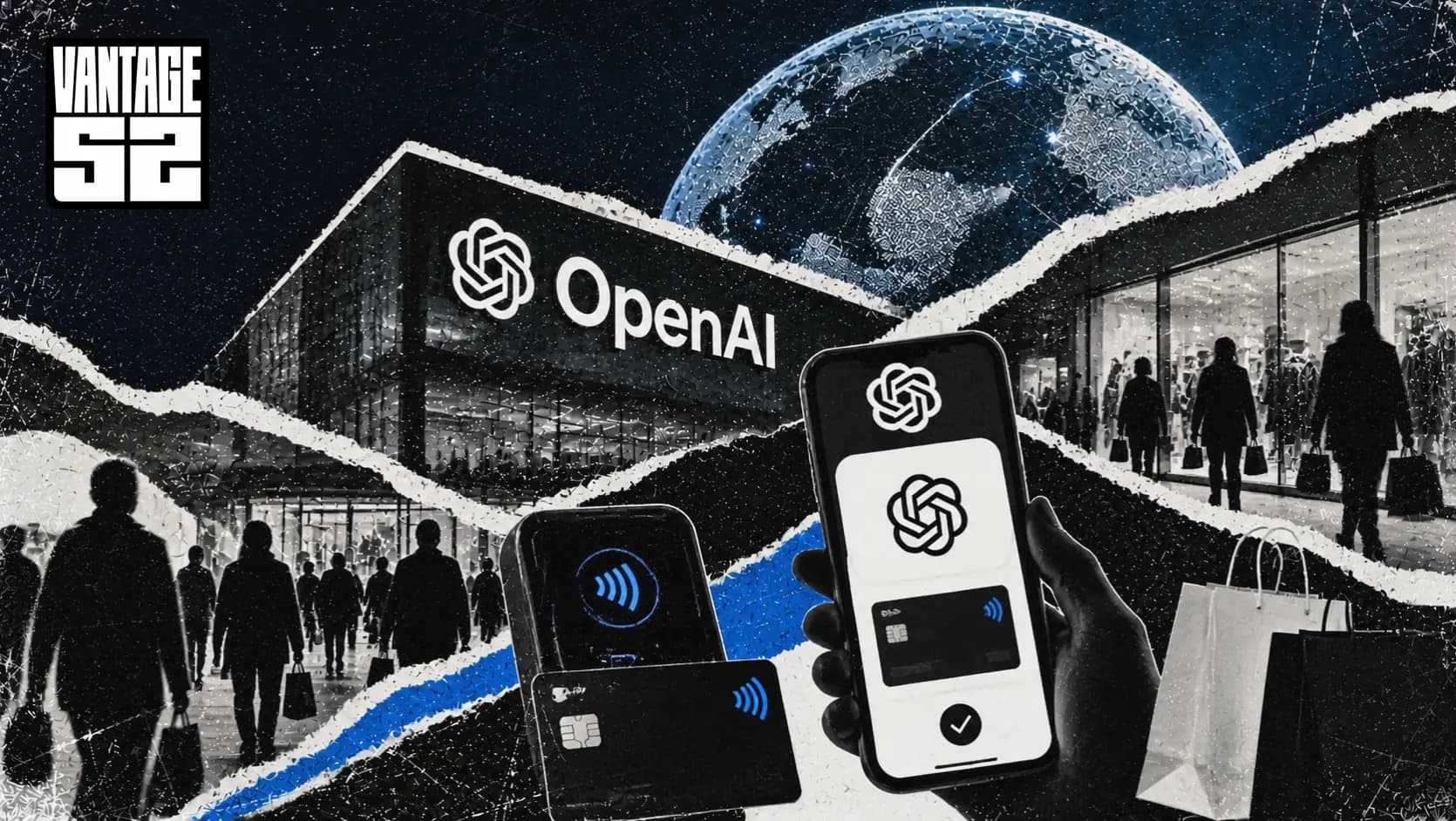
OpenAI began rolling out ChatGPT Wallet on 13 November, letting its dots, the always-on agents it introduced at DevDay on 29 September, complete purchases on a user’s behalf. Availability is limited to a group of ChatGPT Pro subscribers in the United States who are 18 or over and hold a US-issued Visa, Mastercard or American Express card.
Every purchase still needs the user’s approval through Face ID or a fingerprint. Once it is approved, the card network supplies a payment token, a substitute for the card details, so that neither the agent nor the merchant sees the real card number. OpenAI calls it the “first wallet that lets agents pay without access to users’ actual card details”.
The design answers the question of how an agent can pay safely. It does not answer whether the shop will let the agent in. Some retailers block AI agents, and the wallet does not work on their sites. The largest of them is Amazon, which, according to TechCrunch, wants shoppers to use its own assistant, Alexa, instead.
A Token, a Fingerprint and a Record of Consent
The mechanics borrow from the way card networks already secure online payments. A user adds an eligible card once, asks a dot to find and buy something, then reviews the items, the total and the card before approving. OpenAI says each approval creates a clear record of the purchase the user allowed the agent to make.
After approval the dot passes the merchant what it needs to fulfil the order, such as a shipping address and contact details, and the purchase is charged to the selected card. OpenAI says existing card rewards and protections for eligible disputes continue to apply.
That record of consent is the commercially important part. Many card disputes turn on whether the cardholder authorised a transaction, and an agent acting alone would blur that line. A biometric approval tied to a specific basket gives banks, merchants and OpenAI evidence of what the user agreed to, which is what allows an agent purchase to be handled like any other card payment.
OpenAI’s Second Attempt at Shopping
This is not OpenAI’s first move into checkout. In September 2025 it launched Instant Checkout, which let ChatGPT users buy from US Etsy sellers without leaving the chat, with Shopify merchants promised later. It said merchants would pay a “small fee” on completed purchases, and it built the underlying Agentic Commerce Protocol with Stripe.
By March 2026 the company had discontinued it. The Information reported that checkout would move into merchants’ own apps within ChatGPT or back to their websites. Forrester noted that, according to that report, only about a dozen Shopify merchants had been live, although Shopify had told the research firm a month earlier that the figure was closer to 30.
The wallet takes a different route. Instead of running a shop inside the chat, OpenAI gives its agent a tokenised card to use with merchants, and its Commerce Partner Playbook asks businesses to make sure their security settings do not block verified visits from ChatGPT’s cloud browser. None of the launch coverage mentions a fee for merchants.
What Visa, Mastercard and American Express Keep
For the card networks the arrangement keeps them at the centre of agent commerce. Because the payment is an ordinary charge to the user’s existing card, the issuing bank and the network sit in the transaction as they do today, and it is the network, not OpenAI, that issues the token standing in for the card.
Visa laid the ground in June. At its Payments Forum in San Francisco on 10 June it announced a partnership with OpenAI under which Visa supplies its network, tokenisation and risk tools, payments run within permissions users set, such as spending caps and merchant categories, and Visa handles chargebacks and refunds. Rubail Birwadker, Visa’s global head of growth, told Axios that more than one in five transactions are now influenced by large language models.
VANTAGE52 noted in October that Visa’s new brand identity was built for a digital commerce era in which AI assistants increasingly shape purchases. With the wallet, American Express and Mastercard join Visa as partners in the payment layer of ChatGPT, which keeps all three in the transaction however the shopping itself changes.
Amazon and the Retailers That Keep Agents Out
Payment was never the only obstacle. Retailers decide whether an agent may browse, fill a basket and check out, and some have said no. TechCrunch reported that Amazon is the largest retailer to ban AI agents and that it aims to steer users to Alexa.
The legal position is unsettled. Amazon sued Perplexity in November 2025 over the shopping agent in its Comet browser and won a preliminary injunction in March 2026. On 4 August the Ninth Circuit Court of Appeals overturned it, finding that Amazon was unlikely to prove unauthorised access because Amazon’s own customers, not Perplexity, had used Comet to reach the site. The lawsuit continues.
OpenAI is courting the rest. The playbook tells businesses how to submit product feeds, accept payments, add Sign in with ChatGPT and claim a business profile. Rivals are chasing the same merchants. Meta’s Muse has more than 10 million users and shopping has become one of its top activities, TechCrunch reported, and agents from Meta and the startup Instinct, which VANTAGE52 covered in September, can also buy on users’ behalf.
For a retailer the decision is not only about payment risk. An agent that arrives, buys and leaves skips the browsing, recommendations and advertising a shop can earn from along the way, which is one reason a retailer with its own assistant may prefer to keep shoppers there. Demand is also unproven. DoorDash and Uber have so far reported low numbers of orders placed by AI agents, according to TechCrunch.
Spending Limits Are Still a Plan
OpenAI says it is starting with limited availability to learn from real-world use and to improve compatibility and reliability with businesses, banks and payment networks. It has given no timetable for a wider rollout, either to other subscription tiers or outside the United States.
The features that would make agents truly autonomous are still intentions. OpenAI plans spending limits, controls by purchase category or time period and pre-approved purchases, and says that “over time, we expect users to be able to delegate purchases entirely to their agent by setting clear parameters”. Until then every purchase needs a person to look at the basket and approve it with a face or a fingerprint.
The first real test comes within weeks. US Thanksgiving falls on 26 November and Black Friday on 27 November, and how many retailers adopt OpenAI’s playbook before then, and whether Amazon’s position changes, will show whether the wallet has solved only the payment problem or the access problem as well.
Tags
Key Concepts
Sources
Where the reporting above comes from. Follow these to check the figures and statements for yourself.
- OpenAI, Introducing ChatGPT Wallet OpenAI’s announcement of the wallet, its eligibility rules, security design and planned controls.
- OpenAI, Agentic Commerce documentation and Commerce Partner Playbook What OpenAI asks merchants to build to support purchases by agents, published alongside the wallet.
- TechCrunch, ChatGPT’s new Wallet lets AI agents shop and check out for you Eligibility, how purchases work, Amazon’s ban on agents and the state of rival shopping agents.
- 9to5Mac, OpenAI launches ChatGPT Wallet, enabling dot agents to make purchases OpenAI’s description of the wallet, the card partners, the payment token and the limited rollout.
- Android Authority, OpenAI rolls out ChatGPT Wallet for its Dots agents OpenAI’s planned spending controls and its statement on delegating purchases to agents.
- SiliconANGLE, Visa partners with OpenAI to let AI agents make payments for users The terms of the Visa and OpenAI partnership announced at the Visa Payments Forum.
- SiliconANGLE, OpenAI launches dots, always-on AI agents in ChatGPT with their own cloud computers The launch of dots at DevDay and the subscription tiers that received them.
- TechCrunch, OpenAI takes on Google and Amazon with new agentic shopping system The launch of Instant Checkout, the merchant fee and the Agentic Commerce Protocol built with Stripe.
- Forrester, What it means that the leader in agentic commerce just pulled back Analysis of OpenAI’s withdrawal of Instant Checkout, citing The Information and Shopify.
- Decrypt, Perplexity wins appeal against Amazon in AI agent shopping lawsuit The Ninth Circuit ruling that overturned Amazon’s injunction against Perplexity’s shopping agent.