

TensorWave’s 457 MW OpenAI Deal Names the Chips and Dates but Not the Price
The six-year contract gives OpenAI dedicated AMD capacity from 2027 through the first neocloud publicly named under its AMD partnership, but neither side has disclosed the price or how the build-out will be paid for.
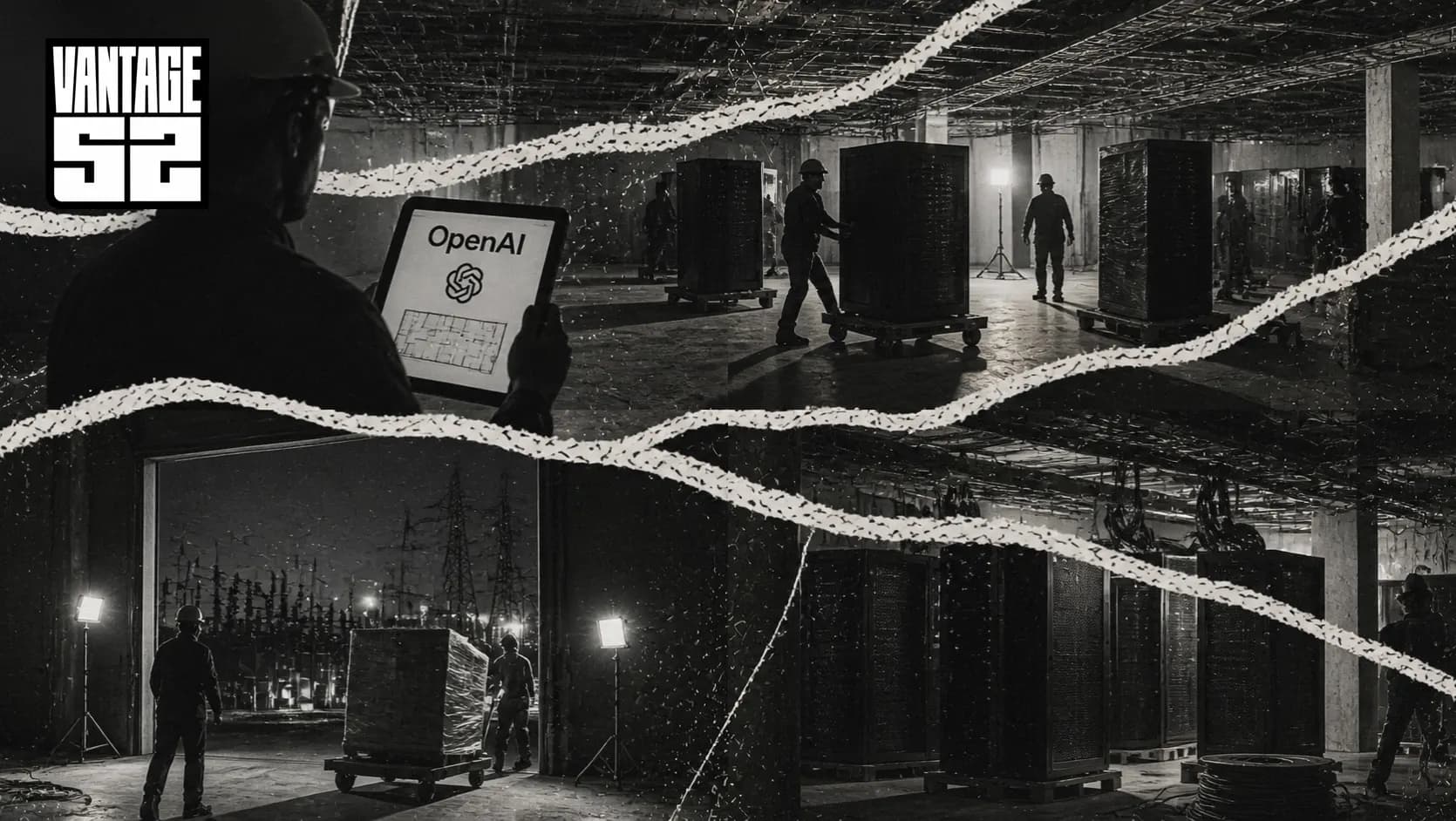
TensorWave, a Las Vegas cloud provider that runs only AMD hardware, announced on 16 November a six-year agreement to supply OpenAI with 457 megawatts of dedicated computing capacity across several US data centre sites. The first capacity is due in the first half of 2027 and the full deployment by early 2028.
The racks will use AMD’s Instinct MI455X GPUs in its Helios rack-scale systems and will serve OpenAI alone. TensorWave calls the contract its largest deployment to date and says it is the first publicly announced neocloud, as specialist AI cloud providers are known, to support OpenAI’s partnership with AMD.
The announcement is exact about hardware and timing and silent on money. Neither company disclosed the contract’s value, and nothing published so far explains how TensorWave, valued at $1.55 billion in June, will pay for a build-out of this size. For investors tracking OpenAI’s spending commitments and the debt behind AI data centres, that is the term that decides how much risk the deal carries, and for whom.
What the Contract Fixes
The public terms come from TensorWave’s release, a note on 17 November from Foley & Lardner, the law firm that advised TensorWave, and trade coverage of both. They set out five things.
- 457 MW of capacity, which trade outlets including w.media describe as IT capacity, reserved for OpenAI with no other tenants.
- A term of six years.
- AMD Instinct MI455X GPUs in Helios rack-scale systems, connected by high-performance Ethernet.
- Several US data centre sites, none of them named.
- First capacity in the first half of 2027 and full deployment by early 2028.
Uday Ruddarraju, OpenAI’s chief technology officer for compute, placed the contract inside the existing chip agreement. “We’re excited to advance our previously announced partnership with AMD through this agreement with TensorWave,” he said. Piotr Tomasik, TensorWave’s president and co-founder, said the industry was entering a phase in which delivering hundreds of megawatts reliably and quickly would separate capable providers from the rest.
What Neither Company Has Said
- The contract’s value, or the price per unit of capacity.
- How the build-out will be financed, and whether OpenAI pays anything in advance.
- Where the sites are, who supplies their power and when each one comes online.
- How many GPUs the 457 MW represents.
- Whether the capacity counts towards the 6 gigawatts in OpenAI’s agreement with AMD.
The last point changes how the deal should be read. If the TensorWave capacity sits inside that agreement, it covers about 7.6% of the 6 gigawatt total, by VANTAGE52’s arithmetic, and shows how part of it will be delivered. If it sits outside, it is extra demand for AMD on top of a commitment the chipmaker has already described to its investors.
How It Fits the AMD Agreement
AMD and OpenAI announced on 6 October 2025 that OpenAI would deploy 6 gigawatts of AMD Instinct GPUs across several product generations, starting with 1 gigawatt of the MI450 series in the second half of 2026. AMD issued OpenAI a warrant for up to 160 million AMD shares, vesting in tranches as deployments grow and as AMD’s share price reaches set targets. Jean Hu, AMD’s finance chief, said she expected the partnership to bring “tens of billions of dollars in revenue” to AMD.
The hardware is now moving. In prepared remarks for its third-quarter results on 3 November, AMD said it began volume shipments of the MI455X during the quarter and that lead customers, OpenAI among them, had brought their first Helios racks online. It also began recognising the accounting cost of warrants issued under customer agreements as MI450 series GPUs shipped, and booked a $1.1 billion non-cash charge, mainly reflecting its higher share price and the changing probability that warrant conditions will be met.
What the TensorWave contract adds is a delivery route. Under this agreement OpenAI rents finished, dedicated capacity from an operator instead of buying the chips itself, so the work and the up-front cost of building, powering and running the sites fall first on TensorWave.
A Small Balance Sheet Behind a Large Commitment
TensorWave was founded in 2023. In June it raised a $350 million Series B at a $1.55 billion valuation, co-led by Magnetar and AMD Ventures, the chipmaker’s investment arm. SiliconANGLE reported at the time that the company ran three data centres, in Arizona, Florida and Pennsylvania, each with about 14 MW of computing capacity, and had signed leases for 500 MW, most of it not yet online.
On those figures the OpenAI contract is roughly eleven times the capacity TensorWave was operating in June, by VANTAGE52’s arithmetic. The company now says it has secured more than 2 gigawatts of long-term data centre capacity, a pipeline of sites rather than computers already running.
One site in that pipeline has already gone. Fermi, which is developing the Project Matador campus in Texas, said on 12 November that it had terminated its August lease with TensorWave, along with an associated AMD credit support agreement. Blockspace, in a report republished by Yahoo Finance, said the lease covered 222 MW of facility power, that Fermi had projected about $6.5 billion of revenue from it over 15 years and that its conditions included project financing sufficient to build the premises. Neither Fermi nor TensorWave has given a reason, and nothing in the public record links that lease to the OpenAI contract.
In the same announcement Fermi said an unnamed investment-grade hyperscaler had agreed to take 600 MW at the site from 2027, backed by a prepayment of more than $200 million, although a definitive lease is still being negotiated.
Financing Is the Missing Term
How neoclouds pay for new capacity has shifted this year. As VANTAGE52 reported on 13 November, Nebius and CoreWeave now rely on customer prepayments and loans secured on customer contracts, structures whose cost depends more on the customer’s credit than on the borrower’s.
That makes OpenAI’s own standing part of TensorWave’s funding question. OpenAI is private and publishes no audited accounts. Its latest fundraising also met resistance on price, and VANTAGE52 reported that it took in about $11 billion at a $1.25 trillion valuation, short of what it first sought. Lenders had already grown more selective about data centre debt, part of the strain on America’s AI infrastructure build-out that VANTAGE52 described in October.
AMD has lent its own balance sheet to partners before. The Fermi lease came with an AMD credit support agreement, and AMD Ventures co-led TensorWave’s last round. Whether AMD backs the OpenAI build in a similar way has not been disclosed.
Each party gains something if the racks arrive on time. AMD gets a dedicated OpenAI deployment to point to as it competes with Nvidia. OpenAI gets capacity built by someone else, at a six-year price it has not made public. TensorWave carries the execution risk in between.
The First Racks Are Due in 2027
The next verifiable step is delivery. TensorWave has committed to first capacity in the first half of 2027 and full deployment by early 2028. Naming the sites would let power connections and construction be checked against that schedule.
AMD’s fourth-quarter results, due early next year, will show how far Helios shipments have ramped after the company said it expected deployments to increase substantially this quarter. Until TensorWave or OpenAI says how the build is funded, the contract shows what OpenAI has ordered but not what it will pay, or who stands behind the debt if the schedule slips.
Tags
Key Concepts
Sources
Where the reporting above comes from. Follow these to check the figures and statements for yourself.
- TensorWave, TensorWave to provide OpenAI with 457 megawatts of AMD-powered AI infrastructure The company’s announcement of the six-year, 457 MW agreement with OpenAI.
- AMD, Third quarter 2026 financial results prepared remarks MI455X volume shipments, OpenAI’s first Helios racks online and the $1.1 billion non-cash warrant charge.
- AMD, AMD and OpenAI announce strategic partnership to deploy 6 gigawatts of AMD GPUs The 6 gigawatt agreement, the first 1 gigawatt MI450 deployment and the warrant for up to 160 million AMD shares.
- Foley & Lardner, Foley advises TensorWave on 457 MW AI infrastructure agreement with OpenAI TensorWave’s counsel on the term, chips, rack systems, sites and delivery schedule.
- The Next Web, TensorWave will supply OpenAI with 457MW of AMD-powered AI capacity Single-tenant terms, the undisclosed contract value and the quotes from OpenAI, TensorWave and AMD.
- Dataconomy, TensorWave signs six-year, 457 MW AI infrastructure deal The release’s terms and TensorWave’s claim of more than 2 gigawatts of secured capacity.
- w.media, TensorWave signs 457 MW deal to support OpenAI’s AMD buildout Describes the 457 MW as IT capacity across multiple US sites.
- SiliconANGLE, TensorWave raises $350M to help break Nvidia’s AI chip monopoly The Series B, its valuation and investors, and TensorWave’s operating sites and signed leases in June.
- Blockspace via Yahoo Finance, Fermi secures $200 million hyperscaler prepayment for 600 MW at Project Matador The terminated TensorWave lease, its 222 MW, projected revenue and financing condition.
- Investing.com, Fermi secures 600 MW hyperscaler deal and terminates TensorWave lease Fermi’s statement ending the TensorWave lease and the associated AMD credit support agreement.