

Google Is Building A $15 Billion AI Power Base In Finland
Its largest European bet, and a 22-year nuclear contract to keep the servers running.
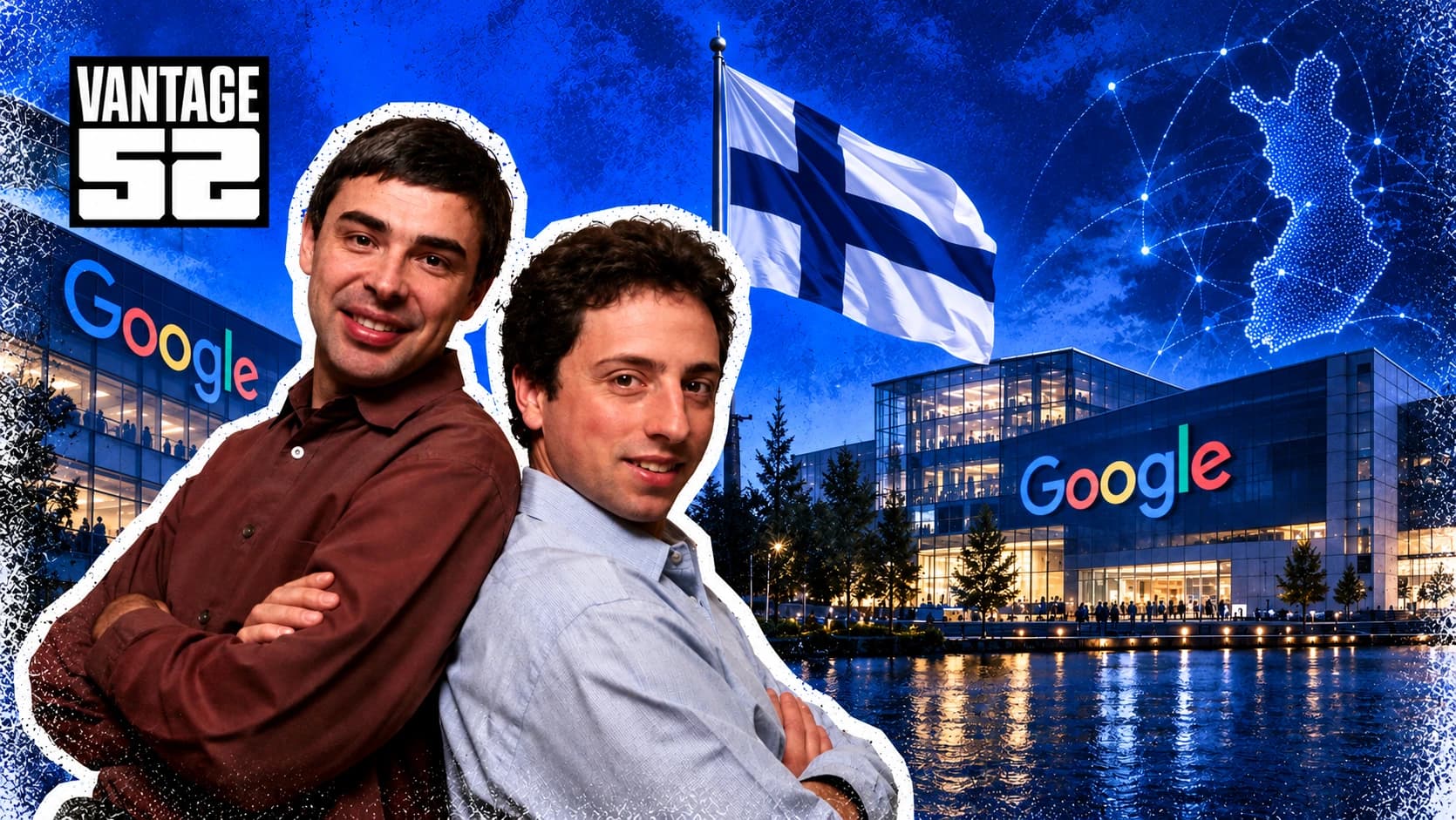
Google is making its largest single investment in Europe, committing €13 billion, approximately $15 billion, to expand its digital and AI infrastructure in Finland over the next two years. The scale of the commitment is significant, but the more important story is how the company plans to power what it builds.
Alongside new data centres and supporting infrastructure, Google has signed a 22-year power purchase agreement with the Finnish energy company Fortum covering up to 50% of the capacity of the Loviisa nuclear power plant. The agreement supports the plant's lifetime extension and gives Google long-term access to low-carbon electricity. It is also the company's first nuclear agreement outside the United States. Google is separately contracting new onshore wind capacity and a 94 MW battery storage system near its planned data centre in Kajaani.
Taken together, the moves reveal a shift taking place across the technology industry. AI infrastructure is becoming an energy business as much as a computing business.
Why Is Google Investing €13 Billion In Finland?
Google has operated in Finland for more than 15 years, beginning with its Hamina data centre, which it built in a converted paper mill in 2009. The company is now expanding that footprint across several Finnish locations, adding new sites in Kajaani, Muhos and Vaala while enlarging Hamina. The investment covers data centres, supporting infrastructure and the energy partnerships designed to run them.
Google says the work will support more than 37,000 jobs nationwide during the construction phase in 2027 and 2028, roughly 16,000 of them in construction itself, and contribute €3.6 billion a year to Finland's GDP over that period. Once the facilities are operational, the company expects them to sustain around 7,000 jobs annually across technical and facility roles, equipment suppliers and the local businesses those workers use. A further €31 million is committed over four years to community programmes in the four host municipalities, including AI skills training and education.
For Finland, this creates a major new source of technology investment. For Google, it provides the physical capacity required to support growing demand for services such as Search, Maps and Gemini, and a long-term energy strategy to go with it.
Why Does AI Need So Much Energy?
AI models require enormous amounts of computing power. Training a sophisticated model consumes large quantities of electricity, but the long-term challenge may be more closely connected to inference. Every time a model processes a request, generates an answer or performs a task, computing infrastructure has to run somewhere. As adoption expands across businesses and consumers, data centres need more electricity and more reliable power.
That changes the economics of technology infrastructure. A data centre can no longer be viewed simply as a building filled with servers. Where it can be built depends on access to electricity, cooling, fibre networks, land, grid capacity and, increasingly, long-term energy contracts. Energy availability has become a strategic factor in siting AI infrastructure.
Finland offers several advantages in that environment. Its northern climate reduces cooling requirements, its electricity system carries a growing share of low-carbon generation, and Google's existing presence in Hamina gives the company an established operational base and local supplier network.
Why Is Google Buying Nuclear Power?
The most strategically significant part of the announcement may be the agreement with Fortum. Google will support the lifetime extension of the Loviisa nuclear power plant through a 22-year power purchase agreement that begins in 2028 with a smaller contracted volume and rises to as much as half the plant's capacity between 2030 and 2049.
Loviisa currently generates roughly 10% of Finland's electricity and employs about 580 people. Fortum has an investment programme of approximately €1 billion designed to extend the plant's operating life, and without it the plant could not continue beyond 2030. Google's long-term commitment gives Fortum the revenue visibility to justify that spending.
The result is an unusual relationship between a technology company and an energy producer. Google needs reliable electricity for its AI infrastructure. Fortum needs long-term demand to support investment in nuclear capacity. The technology company's expansion is helping finance the continued operation of an important piece of national energy infrastructure.
Is This The Beginning Of A New AI Energy Model?
It could be. Technology companies have traditionally bought electricity from utilities or signed renewable power purchase agreements to meet sustainability targets. The emerging model is more integrated, treating nuclear power, renewable generation, batteries, grid flexibility and long-term contracts as parts of a single infrastructure strategy.
Google's Finnish investment combines all of them. The company is supporting the extension of nuclear capacity, contracting new wind power and enabling a 94 MW battery system near its planned Kajaani data centre, which is expected to help balance the grid when renewable generation is lower.
That combination matters because AI demand is relatively constant while renewable output fluctuates. Data centres need power around the clock. Wind and solar generation depend on the weather. Nuclear plants run continuously. Batteries absorb the short-term gaps. Together they create a more flexible energy system around AI infrastructure than any one of them could on its own.
Why Finland?
Finland is becoming an increasingly attractive location for energy-intensive technology infrastructure. The country combines a relatively clean electricity system with strong digital infrastructure, a cold climate, access to renewable energy and an established technology ecosystem.
Google's relationship with the country also predates the current AI boom, which means the new investment builds on an existing industrial base rather than starting from nothing. The location additionally gives the company access to the wider Nordic energy market, and Google and Fortum have agreed to explore further nuclear, renewable and flexibility projects, as well as potential data centre sites on land Fortum owns. That could eventually make the partnership considerably larger than the current investment.
What Does This Mean For Europe?
Europe is trying to expand its AI capabilities while managing rising energy demand, industrial competitiveness and the need to cut carbon emissions. Those goals pull against each other. AI requires more electricity. Europe wants to decarbonise. Industrial companies need affordable and reliable power. Governments want to attract technology investment without adding pressure to electricity prices.
The Google and Fortum partnership offers one possible way through. Instead of building data centres first and solving the energy question afterwards, infrastructure and generating capacity are being developed together. Google has described the arrangement as a potential blueprint for integrating AI growth with Europe's energy systems, an idea that becomes more relevant as other technology companies expand across the continent.
The New Competition For AI Infrastructure
The next phase of the AI race may be decided by factors that have little to do with software. Companies need access to chips, data centres, electricity, fibre networks, land and specialised workers. Governments will compete to attract those investments, and energy companies will become strategic partners rather than suppliers. Countries with abundant, reliable and relatively affordable electricity could gain a real advantage.
This is already changing the geography of technology. For years the conversation about innovation centred on Silicon Valley and a handful of comparable clusters. The next generation of AI infrastructure looks likely to be far more distributed, and the most attractive locations may increasingly be the places where energy and digital infrastructure can grow together.
What Does Google's Finland Strategy Tell Us About AI?
The Finnish investment reveals something fundamental about the economics of artificial intelligence. AI is presented to consumers as software, but the physical plant supporting it is enormous. Behind every model sit data centres, processors, electricity networks, cooling systems and industrial facilities. As demand grows, controlling those physical resources becomes strategically valuable.
Google is therefore making a long-term bet that the future of AI requires more than better models. It requires a reliable physical foundation, and Finland offers the company a place to build one around long-term energy security, low-carbon electricity and infrastructure it already knows.
The €13 billion is going into one country. The strategy behind it reaches much further.
The AI race is becoming an infrastructure race. In that race, access to electricity may become as valuable as access to computing power.
Tags
Key Concepts
Sources
Where the reporting above comes from. Follow these to check the figures and statements for yourself.