
Gunvor Becomes Centalion as Energy Trader Redefines Its Global Identity
The commodities trading group formerly known as Gunvor has adopted the name Centalion as it prepares to relocate its corporate headquarters to Singapore. The transformation reflects a broader effort to reposition the business around its expanding energy, metals and infrastructure activities.
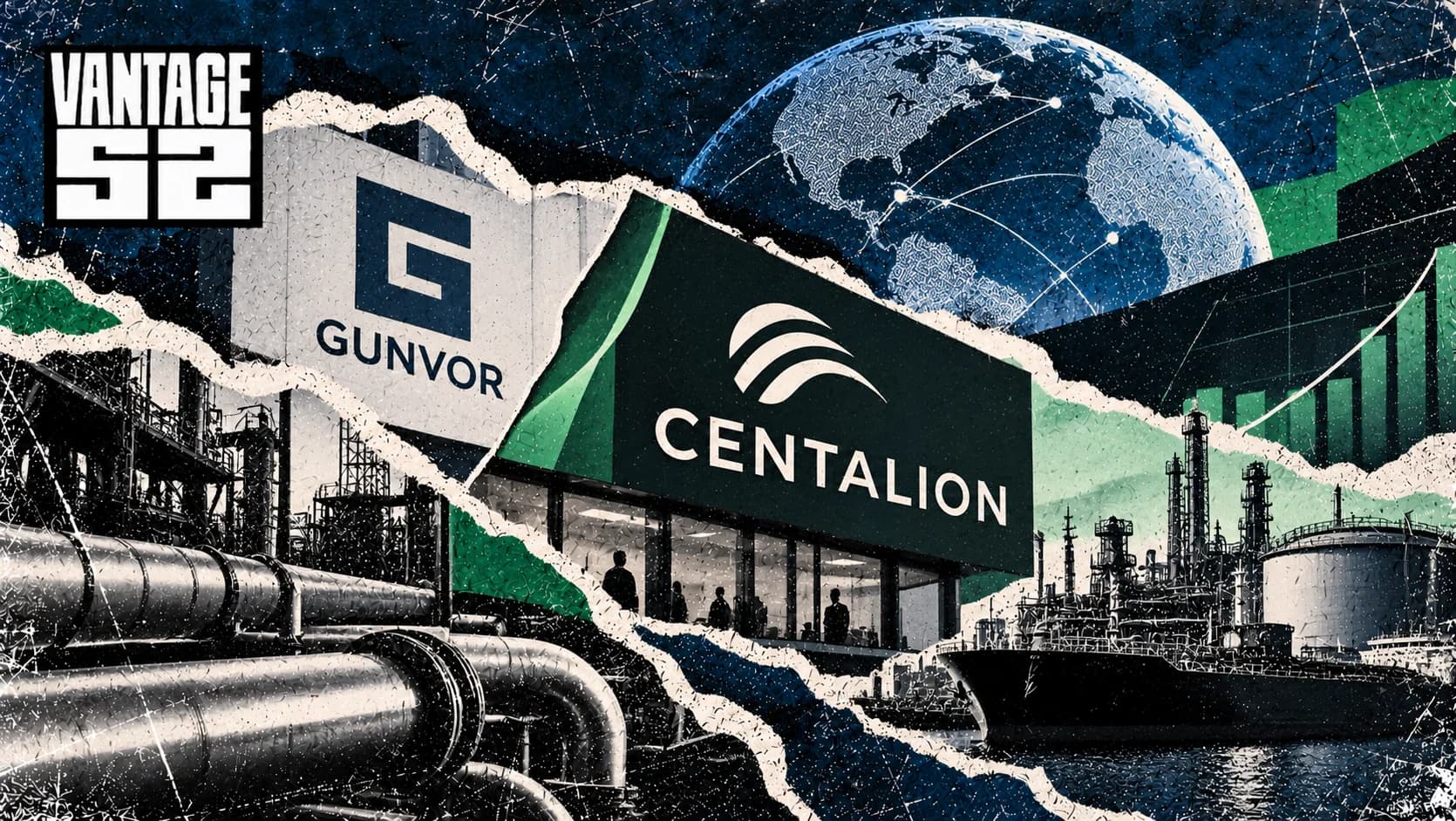
Gunvor Group, one of the world's major independent commodities trading companies, has changed its name to Centalion Group, marking a new chapter in its corporate identity and strategic positioning. Announced on 2 October 2026, the rebrand follows a management buyout completed in December 2025 and coincides with plans to relocate the company's corporate headquarters from Cyprus to Singapore.
The decision brings together three significant developments. The company is introducing a new global brand, operating under a new ownership structure following the buyout, and preparing to establish Singapore as its corporate base, subject to the required regulatory approvals and documentation.
For a business operating across international energy and commodity markets, the changes represent more than a visual refresh. They reflect an effort to align the company's identity with the direction of its operations, which now extend across crude oil, refined products, natural gas, liquefied natural gas, electricity, biofuels, carbon credits, metals, minerals and energy-related infrastructure.
The company will continue operating through its established international trading hubs, including Geneva, Houston, Singapore, Calgary, London and Stamford. Its new identity is expected to be introduced across subsidiaries, offices and other locations over the coming months.
A New Name for an Expanding Business
The name Centalion has been introduced as a reflection of unity, partnership and the company's position in global energy markets. According to the company, the decision followed a partnership referendum in July 2026 and six months of employee engagement and external market-positioning research conducted by brand consultancy Landor.
The naming process comes at a time when the company's business extends across a wider range of activities than traditional oil trading. Alongside physical energy commodities, Centalion operates in power, battery storage, biofuels and carbon credits, while developing its presence in metals and minerals and investing in energy-related infrastructure.
This broader portfolio creates a positioning challenge. A name and corporate identity strongly associated with one category can become restrictive as a company expands into adjacent markets. A broader identity can provide a more flexible framework for communicating the business to customers, financial institutions, suppliers and other commercial partners.
Centalion's new name offers that framework. The company is positioning itself around the breadth of its trading and investment activities while retaining the operational relationships and infrastructure established under the Gunvor name.
The commercial value of the change will depend on how effectively the new identity communicates that breadth. A new name can signal a strategic transition, but the reputation of an international trading company ultimately rests on its ability to execute transactions, manage risk and maintain reliable relationships across markets.
Ownership Changes and the Importance of Corporate Identity
The rebrand follows the completion of a management buyout in December 2025, making the ownership transition an important part of the company's wider transformation.
Changes in ownership can create an opportunity for businesses to reconsider their strategic direction and the way they present themselves to the market. A new corporate identity can help communicate that transition to employees, customers and commercial partners while establishing a clearer narrative for the next phase of growth.
In Centalion's case, the new name is intended to reflect a business moving forward under a revised ownership structure, leadership model and strategic outlook.
The distinction between a new identity and a new legal entity is important. The company has stated that its legal personality, rights and obligations will remain unchanged. The company said all existing contracts and arrangements remain intact, meaning the rebrand is designed to preserve operational continuity while changing the name under which the group presents itself.
This approach can reduce uncertainty for counterparties during a corporate transition. In markets where transactions depend on established relationships, financing arrangements and contractual commitments, continuity is a critical consideration.
The challenge for Centalion will be to ensure that its new identity becomes widely recognised without disrupting the trust associated with its previous name.
Why Singapore Matters to the Company's Positioning
The planned relocation of Centalion's corporate headquarters from Cyprus to Singapore adds a geographical dimension to the transformation. Singapore has been part of the company's international network since 2006 and is a major centre for commodities trading, finance, shipping and international business.
The company has cited Singapore's legal environment, financial and trading infrastructure, and international business community as reasons supporting the proposed move.
The decision also reflects the importance of location in the organisation of global trading businesses. Companies operating across energy and commodity markets must coordinate transactions, logistics, financing and counterparties across multiple jurisdictions. The location of a corporate headquarters can influence how an organisation positions itself within those networks, even when its commercial activities remain distributed across several global centres.
Centalion's planned relocation should not be interpreted as a complete withdrawal from its existing markets. The company has said its main trading offices will remain in Geneva and Houston, where Chairman and CEO Gary Pedersen is based, in addition to Singapore, while it keeps its other trading hubs in Calgary, London and Stamford.
The relocation remains subject to the necessary regulatory approvals and documentation. Until the process is completed, the distinction between the announced plan and the company's final legal position remains important.
Together, the rebrand and proposed move to Singapore communicate a new phase in the company's development. They connect its evolving business portfolio with a revised corporate identity and a different intended headquarters arrangement.
Moving Beyond the Traditional Oil Trader Position
Centalion's expansion across energy, metals, minerals and infrastructure creates an opportunity to communicate a broader commercial proposition.
Physical commodities trading remains central to the business. However, its activities also include investments connected to energy infrastructure, such as terminals, refineries, power plants, batteries and storage facilities. These activities place the company within a wider network of production, transportation, storage and market distribution.
For the brand, this creates a positioning opportunity. A company identified primarily with oil trading may not fully communicate its capabilities across power, alternative fuels, metals and related infrastructure. A broader corporate identity can help present these activities as connected elements of one business.
The shift also reflects the changing structure of global energy markets. Conventional energy commodities continue to play a major role in international trade, while electricity, storage technologies, biofuels and other energy-related activities create additional commercial opportunities.
Centalion is seeking to position itself across this wider landscape. Its new name provides a common identity for a portfolio that spans multiple commodities and related investments, although the commercial credibility of that position will depend on the performance and development of the underlying businesses.
The company said it traded record volumes in the first half of 2026, and Bloomberg has reported first-half net profit of $909 million. Chairman and CEO Gary Pedersen described the rebrand as a move made “from a position of strength”.
The Challenge of Rebuilding Recognition
Changing the name of an established international business carries risks that extend beyond marketing. Customers, suppliers, banks and trading partners must recognise the new identity and understand how it relates to the organisation they already know.
For Centalion, the transition requires a balance between introducing a new name and maintaining the commercial confidence built under Gunvor. This is particularly important in commodities markets, where counterparties often evaluate businesses through their trading history, financial relationships, operational capabilities and reliability.
The company has stated that existing contractual relationships will remain intact. That continuity gives it a foundation for managing the transition, but the new name will still need to become familiar across its international network.
The rollout will involve more than replacing a logo on corporate materials. The new identity must be applied consistently across subsidiaries, offices, communications and commercial touchpoints. Employees and external partners will also need a clear understanding of how the new name relates to the company's existing activities.
Consistency will be particularly important during the transition period, when the former and new names may continue to appear across different documents and markets.
A successful rebrand will allow Centalion to establish a distinct identity without creating uncertainty about the business behind it.
What Centalion's Transformation Signals
Centalion's transition illustrates how corporate branding can become part of a wider strategic realignment. The new name, management buyout and planned headquarters relocation are connected developments that together communicate a revised direction for the business.
For companies operating across international markets, brand identity can help explain changes in ownership, business scope and organisational structure. It provides a consistent way to communicate what the company represents and where it intends to compete.
However, a corporate name alone cannot establish a new market position. That position must be supported by commercial performance, clear communication and consistent execution across the organisation.
Centalion enters this next phase with an established international trading network, a portfolio spanning multiple commodity markets and a plan to establish Singapore as its corporate headquarters. The immediate task is to connect these elements under a new identity while preserving the relationships on which its business depends.
The long-term test will be whether the Centalion name becomes associated with the company's wider capabilities and future direction, while maintaining the confidence accumulated during its years as Gunvor.
For now, the rebrand represents a deliberate attempt to align the company's public identity with the business it has become and the markets it intends to serve.
Tags
Key Concepts
Sources
Where the reporting above comes from. Follow these to check the figures and statements for yourself.
- Centalion, Gunvor becomes Centalion Official release on the name change, the planned move to Singapore, the July 2026 referendum, the Landor research, record first-half volumes, the trading hubs and contract continuity.
- Bloomberg, Gunvor Renames Itself Centalion in Shift Under New Ownership Independent report on the rebrand, the July 2026 referendum, the move from Cyprus to Singapore and first-half 2026 net profit of $909 million.
- Centalion, Centalion’s Ownership Overhaul and Appointment of Gary Pedersen as CEO The December 2025 management buyout in which Torbjörn Törnqvist sold his entire holding to employees and Gary Pedersen became chief executive.
- Reuters via Mining Weekly, Commodities trader Gunvor rebrands as Centalion, plans Singapore redomicile Reuters report on the rebrand, the Singapore redomicile and the buyout completed in December 2025.
- Reuters via Investing.com, Gunvor managers buy out CEO Tornqvist as company seeks ‘definitive reset’ Reuters coverage of the buyout, including the 86.1 percent stake sold by Törnqvist.
- Energy Intelligence, Gunvor Rebrands as Centalion, Switches HQ to Singapore Trade press report on the rebrand and the move of the corporate base from Cyprus to Singapore.
- Cyprus Mail, Global commodities giant is moving its corporate headquarters out of Cyprus Cypriot coverage of the planned headquarters move and the group's principal trading offices.