

Terminal Istanbul Is Betting On A Bigger Future For Turkiye's Tech Economy
An airport built to move passengers is being rebuilt to move capital, technology and companies.
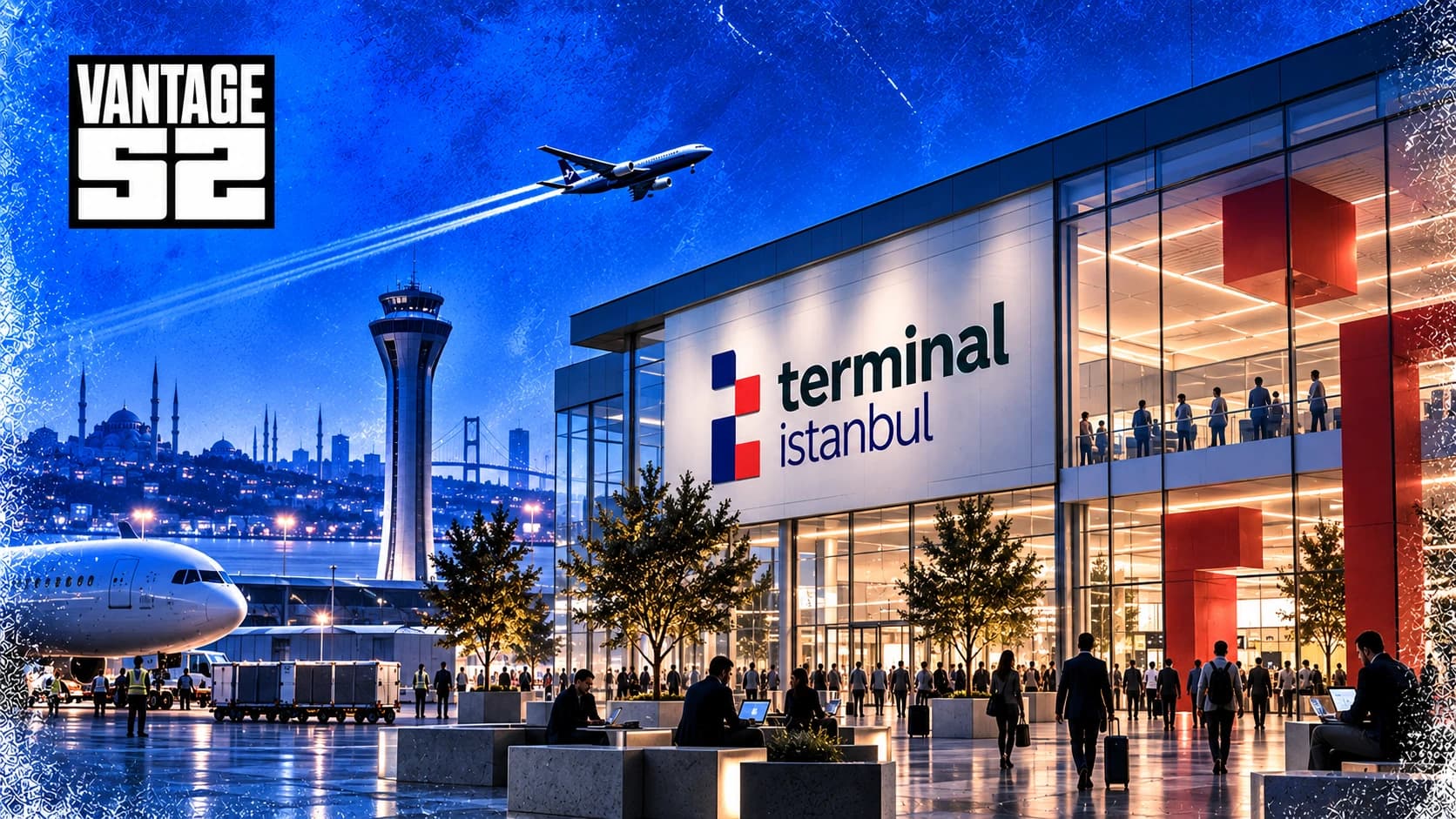
An airport terminal that once connected Istanbul to the world through aviation is being given a very different economic role.
Terminal Istanbul, developed at Ataturk Airport, is positioning itself as a major technology and entrepreneurship hub bringing startups, investors, technology companies, universities, public institutions and young talent into the same ecosystem. Its first 5,000-square-metre phase is opening to entrepreneurs in 2026, while the full development is planned to exceed 200,000 square metres.
But the significance of Terminal Istanbul goes beyond the size of its physical footprint. The project reflects a broader shift taking place across Turkiye's economy. The country has spent decades building industrial capacity, export infrastructure and manufacturing expertise. The next challenge is to turn more of that capacity into technology companies, intellectual property, globally recognised brands and businesses capable of competing on international markets.
Why Is Istanbul Building A New Technology Hub?
Turkiye has developed a much larger technology and entrepreneurship ecosystem over the past decade. Istanbul sits at the centre of that transformation, connecting European, Middle Eastern, Central Asian and Asian markets while providing access to a large domestic consumer base and an established industrial network.
Terminal Istanbul is designed around this geographic advantage. Its official mission is to position Istanbul as a regional and global innovation hub focused on entrepreneurship, investment, R&D and creative industries. The model brings together public institutions, universities, private companies and investment networks rather than treating entrepreneurship as an isolated activity.
That structure matters because successful technology ecosystems rarely emerge from startups alone. They require capital, experienced operators, corporate customers, research institutions, talent and international connections. Terminal Istanbul is being built around the idea that these elements should operate within the same ecosystem.
What Is Turkiye Trying To Build?
For years, Turkiye's global economic identity was strongly associated with manufacturing, construction, logistics, textiles, automotive production, defence and consumer goods.
That foundation remains important. Yet a new layer is emerging.
Turkish companies are increasingly developing their own products, technologies and brands and taking them into international markets. The competitive question is gradually shifting from how much Turkiye can produce to how much value Turkish companies can create, own and export under their own names.
This distinction matters for the future of the economy.
A company that manufactures for an international brand participates in global trade. A company that owns the product, technology, distribution network and brand captures a different level of economic value.
Terminal Istanbul is being developed at a time when Turkiye is trying to increase that second category.
Can Turkiye Export More Than Products?
Turkiye already has significant export capabilities across manufacturing and industrial sectors. The opportunity now is to expand the definition of what gets exported.
Technology can cross borders without the physical constraints of traditional goods. Software, mobile applications, financial technologies, defence technologies, digital services and consumer brands can reach international customers from Turkiye and scale across multiple markets.
The rise of Turkish companies with international ambitions is therefore part of a broader economic transition. The objective is increasingly about building companies that can compete globally, rather than simply supplying companies that already dominate global markets.
Terminal Istanbul can contribute to this transition by giving entrepreneurs access to infrastructure, mentorship, investment networks, prototyping facilities, training and international partnerships. Its digital platform is also designed to connect entrepreneurs, investors and ecosystem stakeholders through profiles, applications, events, documents and reports.
Why Does International Capital Matter?
One of the strongest indicators of whether a technology ecosystem can become globally competitive is its ability to attract international capital.
Terminal Istanbul has already been building relationships with international ecosystem players. Its stated network includes acceleration programmes and investment connections involving Europe, the Gulf, Asia and the United States. The project has also announced collaborations involving international organisations such as Techstars and Shanghai-based investment networks.
This creates an important feedback loop.
International investors bring capital, but they also bring networks, market knowledge, corporate relationships and potential access to new customers. For Turkish startups, that access can be as valuable as funding itself.
A company may begin in Istanbul, develop its technology in Turkiye and still build its most important commercial relationships in London, New York, Dubai, Riyadh, Berlin or Singapore.
The infrastructure connecting those markets can determine how quickly that company scales.
Why Does The Location Matter?
Ataturk Airport gives Terminal Istanbul an unusual geographic and symbolic advantage.
For decades, the airport functioned as one of Istanbul's primary gateways to the international economy. Its new role places technology, entrepreneurship and investment within the same geography that once connected millions of passengers to global markets.
That creates an interesting economic narrative.
The infrastructure that once moved people across borders can now help move ideas, capital, technology and companies across borders.
Istanbul already benefits from its position between Europe, Asia and the Middle East. Terminal Istanbul is attempting to convert that geographic position into an institutional advantage for entrepreneurship and investment.
What Could Terminal Istanbul Mean For Turkish Brands?
The long-term opportunity may be larger than creating more startups.
Turkiye needs companies capable of becoming global brands.
That means companies with strong intellectual property, recognisable identities, international distribution, pricing power and the ability to reinvest in product development. It also means creating an environment where entrepreneurs can move from an initial idea to a product, from a product to a company, and from a domestic company to an international brand.
This is where technology and branding increasingly intersect.
Global markets rarely reward scale alone. They reward products people recognise, trust and choose. Turkiye's next generation of companies will therefore compete through technology, design, customer experience, distribution, brand strategy and international positioning at the same time.
Terminal Istanbul's focus on entrepreneurship, R&D, investment and creative industries reflects this broader reality.
Can Istanbul Become A Global Innovation Hub?
The ambition is substantial.
The project has been designed to accommodate thousands of technology companies and startups, with infrastructure ranging from offices and incubation facilities to prototyping and R&D laboratories. Earlier plans described a centre of roughly 210,000 square metres, while more recent announcements place the planned development above 200,000 square metres.
Yet physical scale will only be one measure of success.
The more meaningful question is what happens inside the ecosystem.
How many startups secure international investment? How many Turkish companies enter new markets? How many technologies become commercial products? How many companies build globally recognised brands? How many international companies choose Istanbul as a base for regional innovation?
Those outcomes will determine the economic significance of the project.
What Would Success Look Like?
A successful Terminal Istanbul would produce more than a large technology campus.
It would help create a pipeline of companies that begin in Turkiye and scale internationally.
It could connect Turkish entrepreneurs with investors from Europe, the Gulf, Asia and the United States. It could help corporations work with startups, universities commercialise research and entrepreneurs access markets that would otherwise take years to reach.
Most importantly, it could help Turkiye capture more value from its own economic capabilities.
The country has manufacturing depth, a large talent pool, geographic access to several major markets and an increasingly sophisticated technology ecosystem. The next stage is turning those advantages into companies and brands with global economic influence.
Istanbul's Next Economic Gateway
Terminal Istanbul represents an ambitious idea about where Turkiye's economy can go next.
The country has spent decades becoming a major producer and exporter. The next chapter is about building more companies that own the technology, products and brands being exported.
That shift has implications far beyond startups.
It touches investment, employment, exports, intellectual property, industrial policy, technology development and Turkiye's position in global value chains.
Ataturk Airport once connected Istanbul to the world through aviation.
Terminal Istanbul is betting that the same geography can now connect Turkiye to the world through technology, investment and entrepreneurship.
The real measure of its success will not be the size of the terminal.
It will be how many global companies, technologies and brands emerge from Turkiye and reach the world.
Tags
Key Concepts
Sources
Where the reporting above comes from. Follow these to check the figures and statements for yourself.