

Allison Unifies Its Brand Portfolio After Dana Acquisition
Allison Transmission is bringing its expanded industrial business under one corporate identity while retaining established product brands. The move highlights a central challenge in acquisition strategy: building a unified company without losing the customer recognition accumulated by individual products.
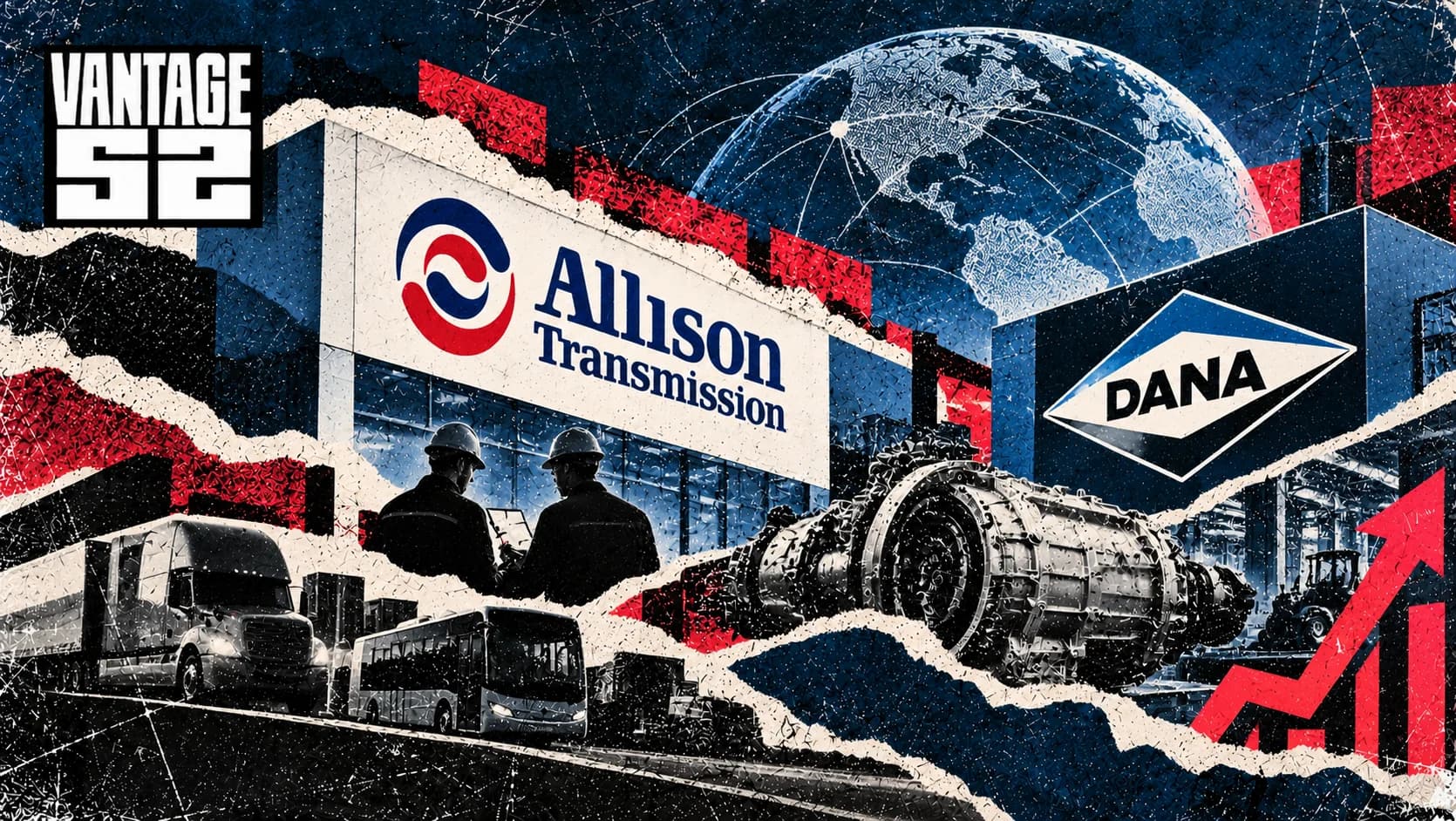
Allison Transmission is consolidating its corporate identity following its roughly $2.7 billion acquisition of Dana Incorporated's Off-Highway Drive & Motion Systems business, completed on 1 January 2026, introducing a unified brand structure designed to bring its expanded portfolio under the Allison name.
Announced on 23 October 2026, the new architecture makes Allison the enterprise brand, with its Allison Transmission and Allison Off-Highway Drive & Motion Systems business units operating under the unified Allison name. Established product names within the acquired business, including Spicer, Brevini, GWB, Fairfield and Graziano, will remain in use under the Allison master brand. Spicer remains a registered trademark of Dana Limited, which Allison uses under licence.
The decision reflects a strategic distinction between corporate identity and product identity. Allison is bringing the businesses together under a common corporate name while preserving product brands that customers, distributors and industrial operators already recognise.
For a company serving sectors such as infrastructure, construction, mining, agriculture, energy, transportation and national security, that balance carries practical importance. Product brands can hold years of accumulated reputation, technical familiarity and customer relationships. Replacing them without considering those associations could create unnecessary friction in markets where reliability and established performance matter.
One Corporate Brand, Multiple Product Identities
Brand architecture determines how a company organises the relationship between its corporate name, business units and individual products. It becomes particularly important after acquisitions, when separate organisations bring different histories, customer bases and market positions into the same portfolio.
Allison's approach establishes a clear corporate identity while retaining selected product names from the acquired business. Rather than eliminating established identities, the company will position them within a broader Allison structure.
This creates a common point of recognition for the combined business while allowing individual products to retain their existing market associations. The approach also gives Allison a framework for presenting a wider range of industrial capabilities to customers operating across different applications.
The distinction matters because corporate recognition and product recognition serve different purposes. The corporate brand communicates the scale, resources and overall direction of the organisation. Product brands can communicate specific capabilities, technical heritage and familiarity within particular customer groups.
A well-designed architecture allows these roles to reinforce one another. The corporate name can strengthen confidence in the overall portfolio, while established product identities continue to support recognition at the point of evaluation and purchase.
Why Product Heritage Matters After an Acquisition
Acquisitions often create pressure to simplify a company's identity. A single name can make the organisation easier to explain, create a more consistent market presence and reduce the fragmentation associated with operating multiple businesses.
However, simplification carries risks when product brands have independent recognition. Customers may associate a familiar name with specific engineering characteristics, service expectations or a history of dependable performance. Those associations can influence purchasing decisions, particularly in industrial markets where equipment operates in demanding environments and replacement decisions involve significant operational considerations.
Allison has explicitly indicated that established product brands will be retained and continue to be developed, sold and serviced as before. The company says the combined organisation's resources and global reach will support the portfolio.
This signals an intention to preserve existing customer relationships while establishing a more unified corporate structure. The value of that decision will depend on how effectively the company communicates the relationship between the Allison name and the products customers already know.
Retention alone does not guarantee continuity. Product quality, technical support, parts availability and service relationships will remain central to customer confidence. The new architecture provides a structure for integration, while operational execution will determine whether customers experience the expected benefits.
The Commercial Value of a Master Brand
A master brand can help a company connect products that previously operated under separate corporate identities. It creates opportunities for more consistent communication, a clearer presentation of capabilities and stronger recognition across a broader portfolio.
For Allison, the combined structure brings transmission systems and off-highway drive and motion products into one corporate framework. This can help the company present a wider range of solutions to industrial customers, distributors and business partners.
A unified identity can also support commercial conversations across product categories. Customers evaluating one part of the portfolio may gain a clearer understanding of the company's broader capabilities, while the corporate brand can provide a common reference point across markets.
Yet the value of this model depends on execution. If the master brand becomes too dominant, individual product identities may lose some of their established visibility. If the relationship between the corporate and product brands remains unclear, customers may struggle to understand how the portfolio fits together.
The challenge is therefore to establish a clear hierarchy without erasing meaningful distinctions. Allison's decision to retain selected product brands suggests that the company intends to pursue integration through endorsement and shared corporate identity rather than complete replacement.
Integration Will Matter More Than the Announcement
The new brand architecture takes effect on 23 October, with the unified identity set to be showcased at bauma China, held in Shanghai from 23 to 27 November. The event provides an opportunity for Allison to present products spanning its broader portfolio, including axles, transmissions and driveshafts.
That visibility will help introduce the structure to existing and prospective customers. More important, the transition will need to work across the everyday touchpoints through which the company operates, from product documentation and sales materials to distributor relationships and after-sales service.
A successful brand integration should make the organisation easier to understand without creating uncertainty about established products. It should also give the company a consistent way to communicate its capabilities while preserving the identities that remain commercially valuable.
These objectives require coordination between marketing, sales, product management and customer service. Brand architecture may define the intended relationship between names, but every customer-facing team helps determine how that relationship is understood in practice.
Allison's announcement establishes the direction. The longer-term outcome will depend on how consistently the company applies the structure across its markets and product portfolio.
What the Decision Reveals About Brand Strategy
Allison's move illustrates why brand management becomes a strategic issue during acquisitions. Bringing businesses together involves more than combining assets and operations. Companies must also decide which identities should lead, which should remain visible and how the resulting portfolio should be explained to the market.
There is no universal answer. Some acquisitions benefit from a complete transition to the acquiring company's name. Others depend on preserving product brands with strong recognition or specialised market associations. The appropriate structure depends on customer expectations, competitive positioning and the commercial role of each identity.
Allison is pursuing a model that combines corporate unity with product-level continuity. The approach gives the company one enterprise identity while retaining established names across its off-highway portfolio.
For business leaders, the broader lesson is that brand consolidation should follow a clear understanding of where brand value resides. A simpler portfolio can improve coherence, but indiscriminate simplification can also weaken assets that took years to establish.
As Allison integrates its expanded business, the effectiveness of its brand architecture will be measured by how well it connects the company's broader capabilities with the recognition and trust already associated with its products.
Tags
Key Concepts
Sources
Where the reporting above comes from. Follow these to check the figures and statements for yourself.
- Allison Transmission, Allison Unveils Go-Forward Brand Architecture Following Acquisition of Dana's Off-Highway Drive & Motion Systems Business Official release making Allison the enterprise brand from 23 October 2026, retaining Spicer, Brevini, GWB, Fairfield and Graziano and previewing the bauma China showcase.
- Allison Transmission, Allison Transmission Completes Acquisition of Dana Incorporated's Off-Highway Drive & Motion Systems Business Allison confirms completion of the roughly $2.7 billion deal and names the two business units and their leaders.
- U.S. Securities and Exchange Commission, Allison Transmission Holdings Form 8-K, January 2026 Regulatory filing recording completion of the acquisition on 1 January 2026 for a purchase price of $2.732 billion.
- Allison Transmission, Allison Transmission Announces Acquisition of Dana's Off-Highway Business The original agreement to buy Dana's Off-Highway business for about $2.7 billion.
- Dana Incorporated, Dana Incorporated Completes Sale of Off-Highway Business The seller's confirmation that the sale to Allison closed for $2.7 billion.
- Power Progress, Allison unveils brand strategy post-Dana acquisition Trade press report on the unified Allison brand, the retained product brands and the Spicer licence from Dana.
- bauma CHINA, bauma CHINA 2026 Advances Global Industry Exchange with New Dual-Venue Format The organiser's dates for bauma China 2026 in Shanghai, across two venues from 23 to 27 November.
- PR Newswire, Allison Unveils Go-Forward Brand Architecture Following Acquisition of Dana's Off-Highway Drive & Motion Systems Business Wire distribution of the same Allison release.